Aggressive skates history: iconic models year by year
From the 1988 Lightning TRS to the 2026 models: the aggressive skates that defined each era and what they changed (soul plates, UFS, unibody, UFS+).
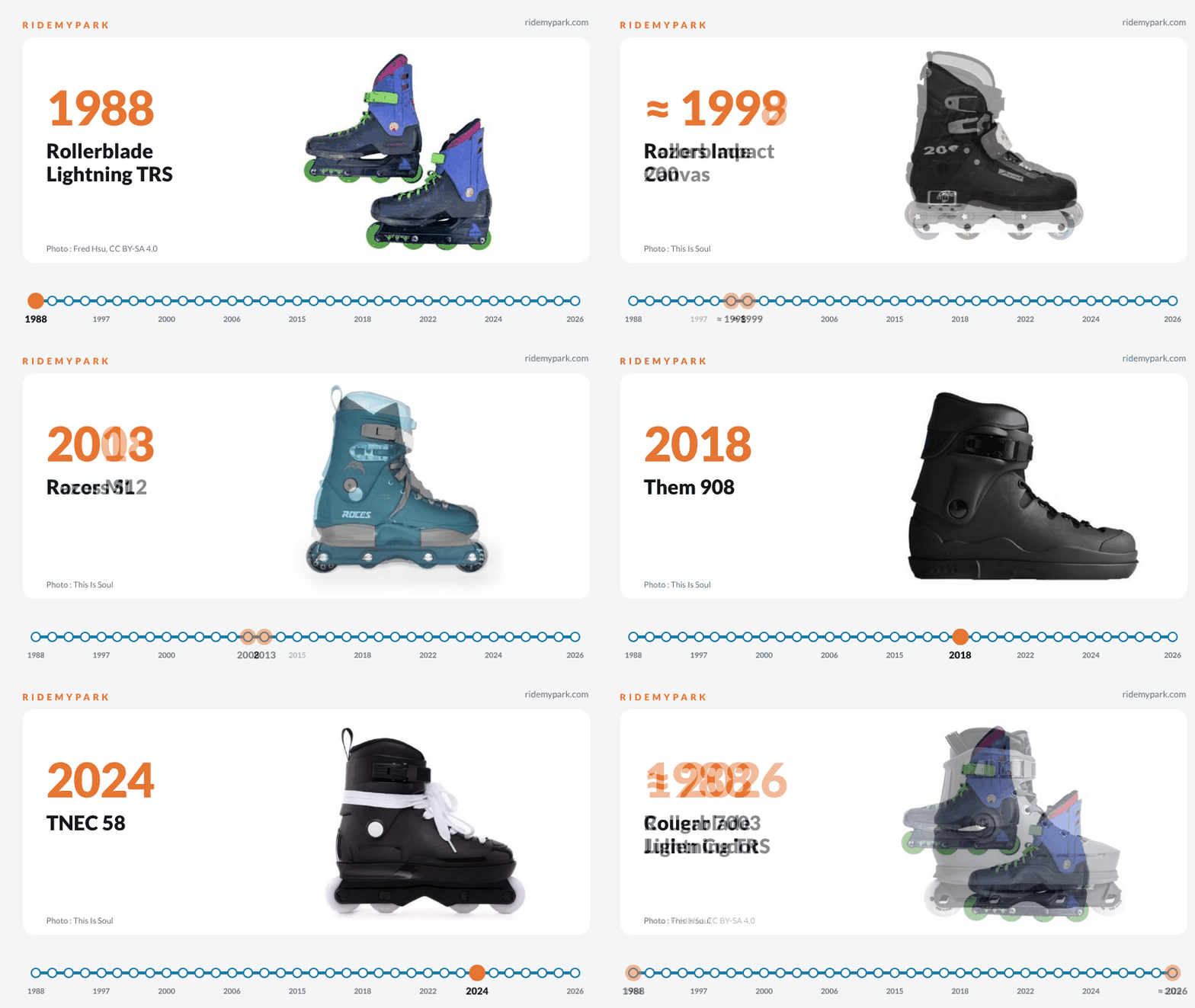
The first aggressive inline skate dates from 1988, according to Wikipedia: the Rollerblade Lightning TRS. In almost forty years, the skate went from a reinforced hockey boot to a street tool built for grinding: soul plates, H-blocks, the UFS standard, unibody boots and big wheels. Here are the models that defined each era, year by year, and what each one changed.
Key facts
- 1988: the Rollerblade Lightning TRS is considered the first aggressive skate, according to Wikipedia.
- 1996: the Roces Majestic 12 (M12) comes out and becomes a classic, according to This Is Soul.
- 1999: USD, Kizer, 50/50 and Salomon team up to create the UFS standard, according to Powerslide. It sets the frame's mounting bolt spacing at 167 mm and its width at 41 mm, according to Bladeville: any UFS frame fits any UFS boot. The first UFS frames arrive in 2001.
- 2015: the USD Aeon merges the boot, soul plate and frame into one piece, according to Roller en ligne.
- 2018: Jon Julio ends Valo and launches Them Skates with the 908, according to Be-Mag.
- Aggressive or regular skate: an aggressive skate has a soul plate under the sole and an H-block between the middle wheels for grinding, small hard wheels and a reinforced shell. A regular inline skate is built to roll fast and far.
The complete timeline, year by year
Every model in this article, year by year. Linked names go to the product page in the shop. "Around" dates are approximate. The 7 key milestones are marked 🔴.
- 1980: Rollerblade (the brand is founded).
- 🔴 1988, key milestone: the first aggressive skate. Rollerblade Lightning TRS.
- Around 1991: Rollerblade Lightning 608.
- Around 1993: Rollerblade Tarmac.
- Around 1994: Rollerblade Boxcar, Roces Barcelona, Rollerblade Tarmac CE and Bauer XF/3.
- Around 1995: Oxygen Aggressor, Rollerblade Fusion and Ultra Wheels Street Attack.
- 🔴 1996, key milestone: low frames, base plate. Roces M12, K2 Fatty, Oxygen Aggressor 2 and Rollerblade Trooper Chris Edwards.
- 1997: Roces 5th Element, K2 Fatty Pro and Oxygen AR 1.1 (one-piece soulframe, USD is born).
- 1998: Razors Cult, Razors Impact 200, Salomon ST9, K2 Backyard Bob and Oxygen AR 2.
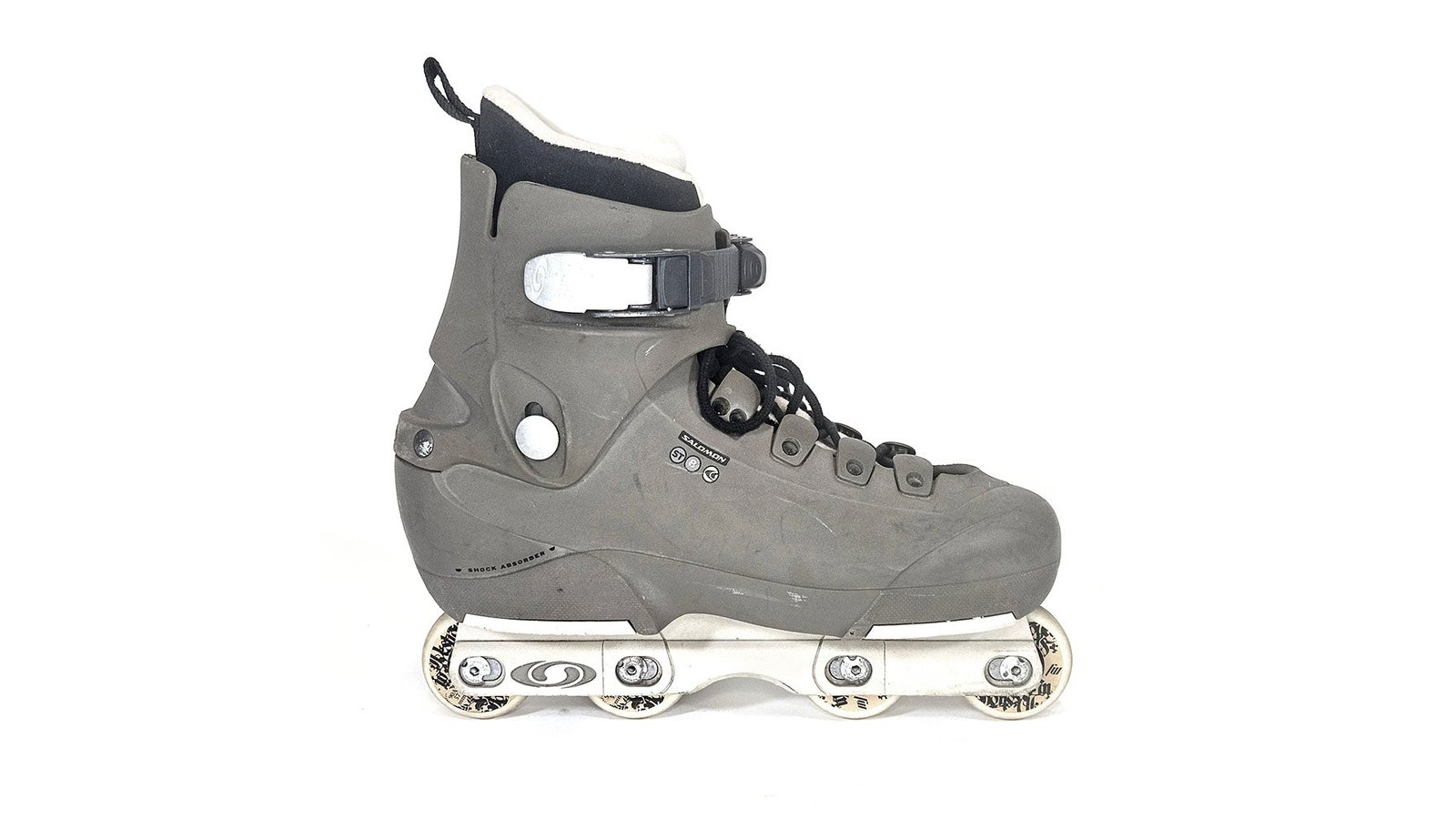
- 🔴 1999, key milestone: UFS alliance. USD UFS Throne, Salomon ST8, Roces Khuti, Rollerblade Canvas and K2 Front Man.
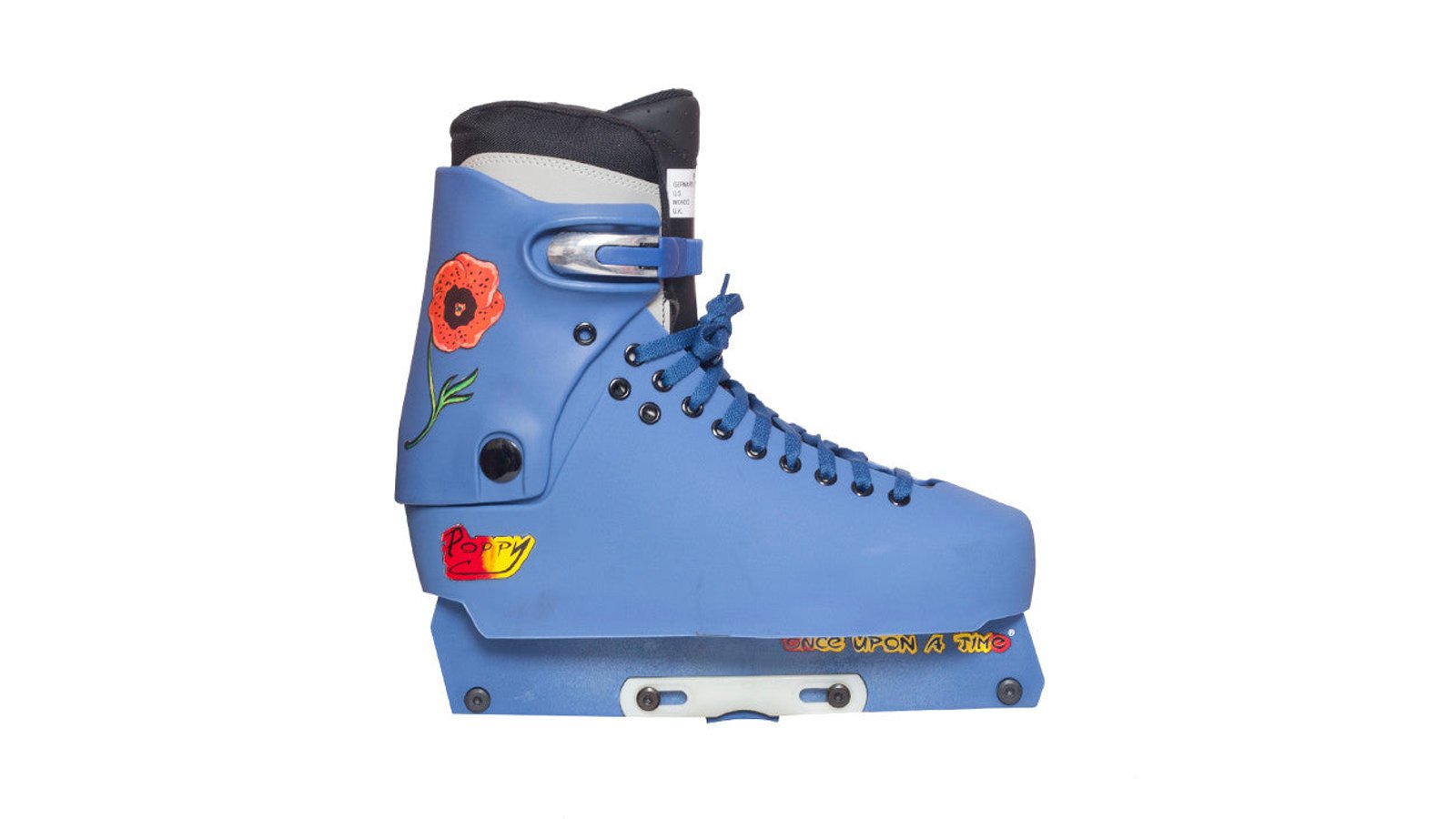
- Around 2000: Out Poppy, Salomon ST10 and K2 Soulslider.
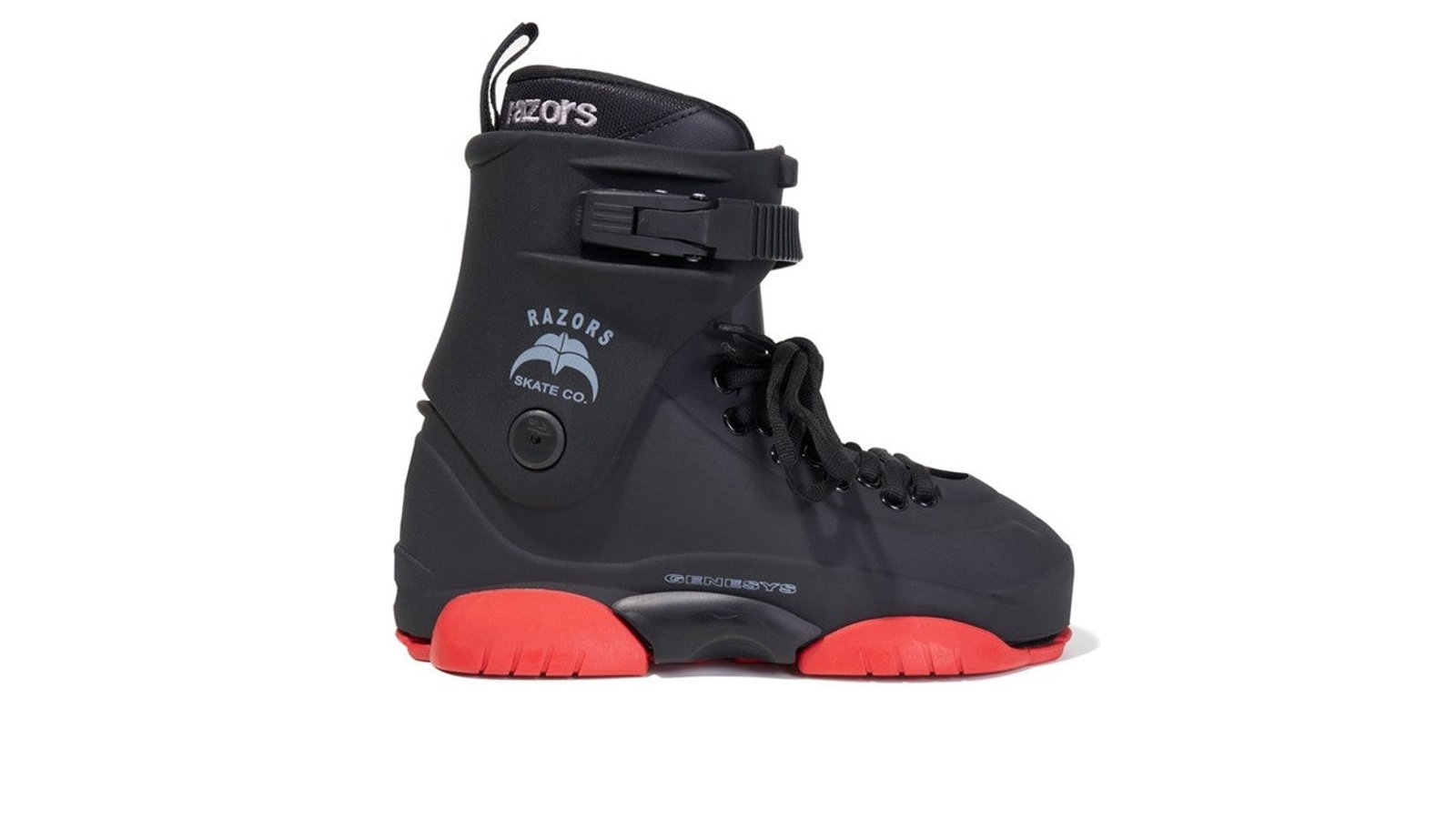
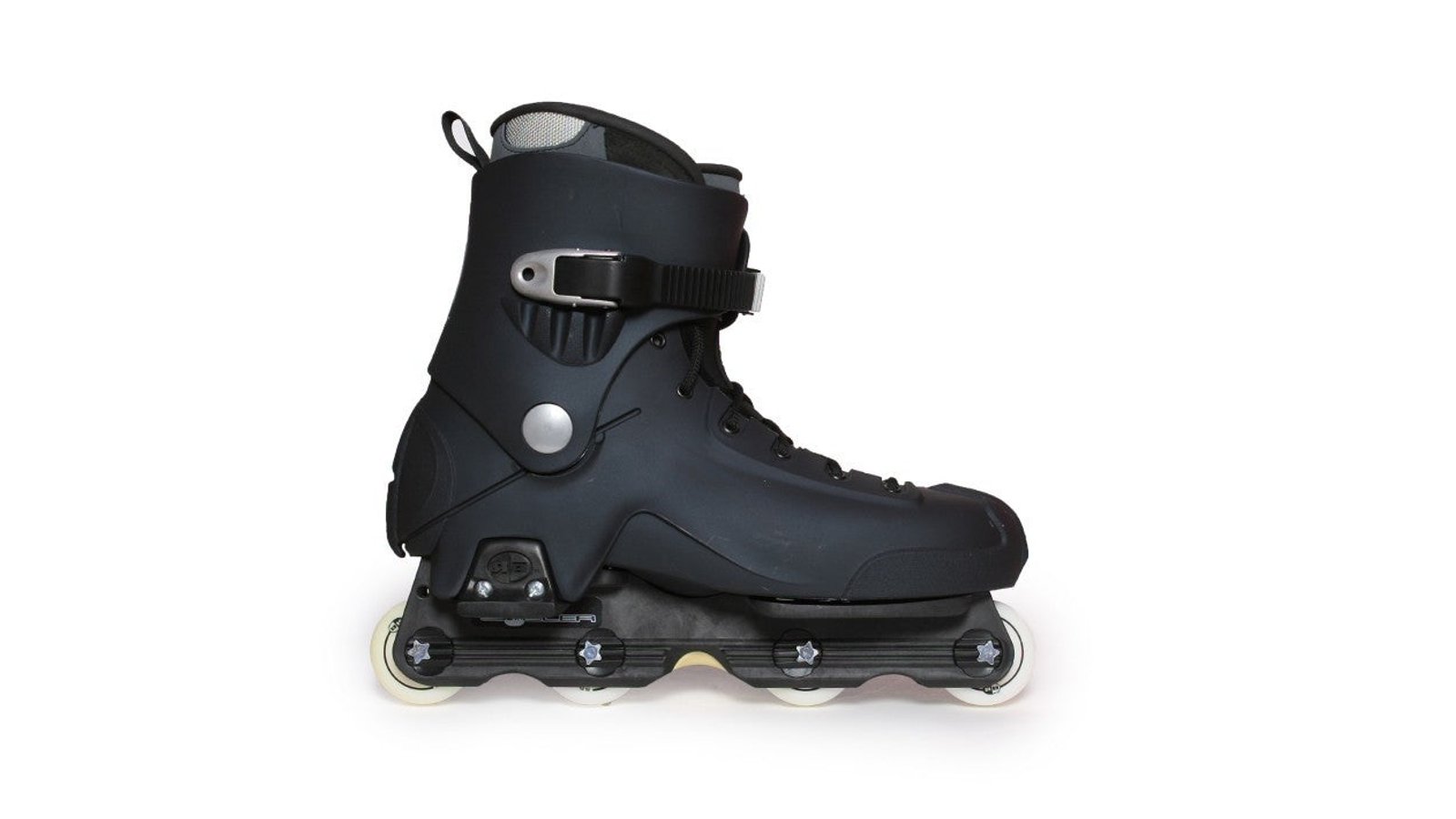
- 2001: Razors Genesys, Rollerblade Swindler, USD Psirus, Deshi Bar and Salomon ST7 (first UFS frames).
- Around 2002: Remz R2D2, USD UFS Seven, Salomon ST80 and Razors Cult 2.
- 🔴 2003, key milestone: skater attached to the soul, Valo is born. Xsjado Chris Farmer, Razors Genesys 3 and Salomon ST90.
- Around 2004: Valo, Remz OS1 and USD Classic Throne.
- Around 2005: Razors Aragon 1, Valo AB.1, Remz OS2, Anarchy Chaos and the Deshi Colin Kelso Pro, according to Rollernews.
- Around 2006: Xsjado Jeff Stockwell Pro, Valo JJ, Razors Aragon 2 and Salomon STi Vinny Minton.
- 2007: USD Throne Rachard Johnson, Remz HR 1 and Remz OS3 (USD turns 10, according to Slide Inline).
- 2008: Razors SL, Deshi CH1, Valo TV and Nimh Shank (lighter shell, first carbon parts).
- 🔴 2009, key milestone: first carbon aggressive skate. Deshi Carbon, USD Carbon, Razors Aragon 3, Valo EB and Remz HR 1.1.
- Around 2010: Remz Chris Haffey Signature 2.0, Nimh Oh Yeah and SSM. Remz released the Haffey 2.0 in March 2010, according to Be-Mag; Chris Haffey also helped develop the Remz HR concept, according to SkatePro.
- Around 2011: USD Carbon Free, USD VII, Adapt Hyperion, Valo V13, Razors Aragon 4 and Remz HR 1.2. Carlos Pianowski's USD VII is in the 2011 catalogue, according to Roller en ligne.
- Around 2012: Nimh Timeless.
- 2013: Roces M12, Seba CJ Wellsmore, Razors Aragon 5, Xsjado 2.0, Valo Light and Remz HR 2 (the M12 returns).
- Around 2014: Adapt Brutale.
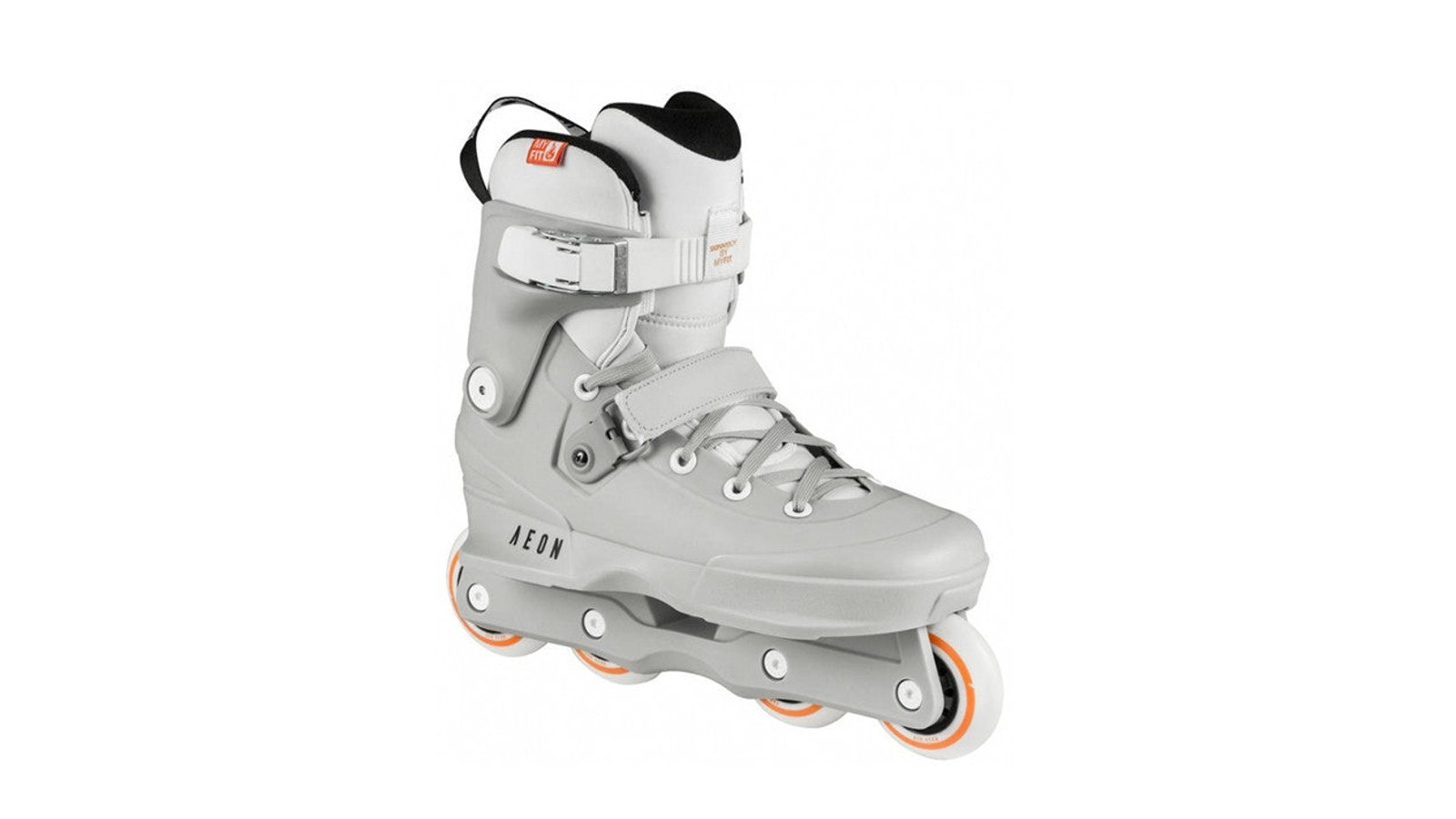
- 🔴 2015, key milestone: unibody, 72 mm wheels. USD Aeon, Gawds Sizemore Pro and Razors Aragon 6.
- Around 2016: Roces M12 Lo, USD Sway, K2 Unnatural, Gawds Franky Morales Pro and Remz Nils Jansons Pro.
- 2017: Razors Shift and USD Aeon 72 (quick-change frame, USD turns 20).
- 🔴 2018, key milestone: a new generation of brands. Them 908, Mesmer Throne TS1, Trigger and USD Aeon Sam Crofts Pro.
- Around 2019: Rollerblade Blank, USD Sway Carlos Bernal Pro and Micro MT Plus.
- Around 2020: Them 909, Razors Shift 2 and Mesmer Throne TS2.
- Around 2021: Them 908 2nd Edition, Brain Dead x Them 908 and Chimera Legacy.
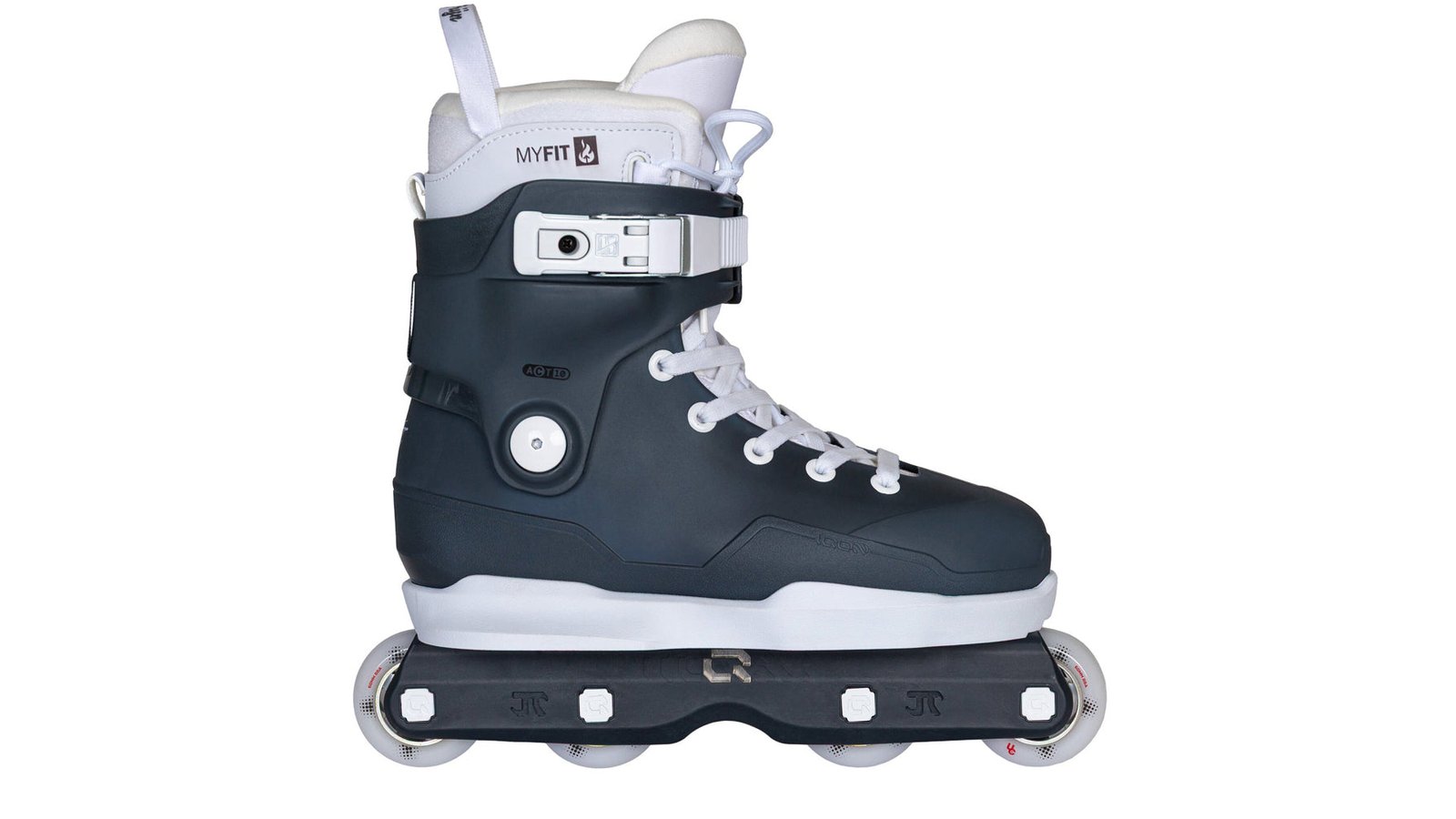
- Around 2022: Iqon ACT AG, FR UFR Street Antony Pottier, Faction Tactical V1, Mesmer Levitator and Adapt Symbiote.
- Around 2023: Them Danny Beer Pro.
- 2024: Standard Skate Omni V1, Gawds FM 5, TNEC 58 and Echo Verve.
- Around 2025: Them 901, Cougar 7003 and Standard Skate Omni V3 (date they went on sale at This Is Soul).
- Around 2026: Mesmer Eclipse TS, Iqon ACT AG Jaro Frijn Pro and Cougar 7003 Julien Cudot (Mesmer and Cougar: date they went on sale at This Is Soul).
The beginnings: from hockey to street (1980-1995)
The first aggressive skates were derived from hockey skates. Brands gradually released models built for jumps and grinds.
1980: the birth of Rollerblade
In 1980, within a group of ice hockey players in Minnesota, Scott and Brennan Olson found the company Rollerblade, according to Wikipedia.
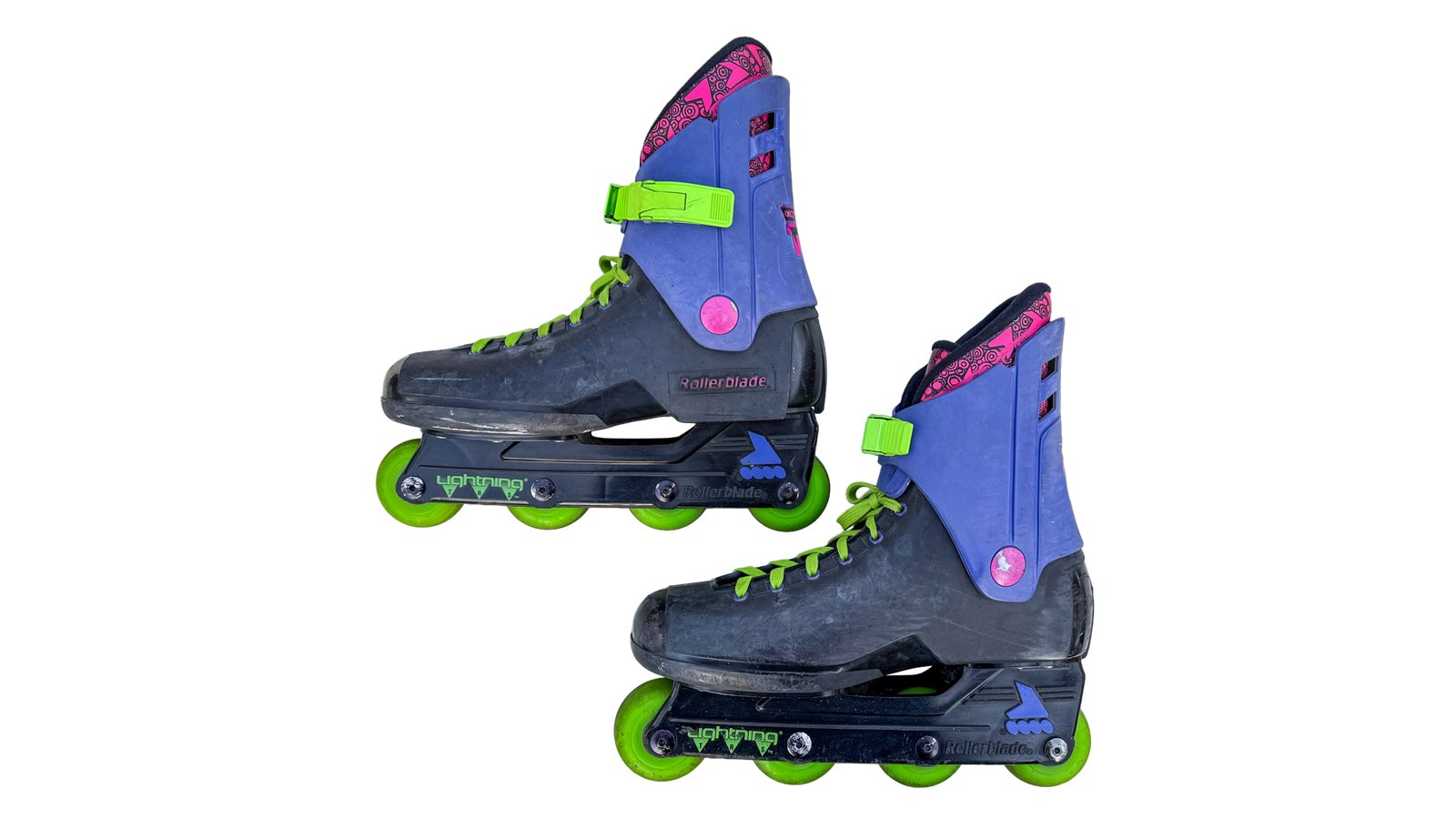
1988: Rollerblade Lightning TRS
Rollerblade releases the Lightning TRS, which Wikipedia describes as the first aggressive skate.

Did you know? The very first inline skating video may be a 1988 Rollerblade VHS tape: "Rollerblade... The Team, The Skate, The Sport", according to Rollernews.
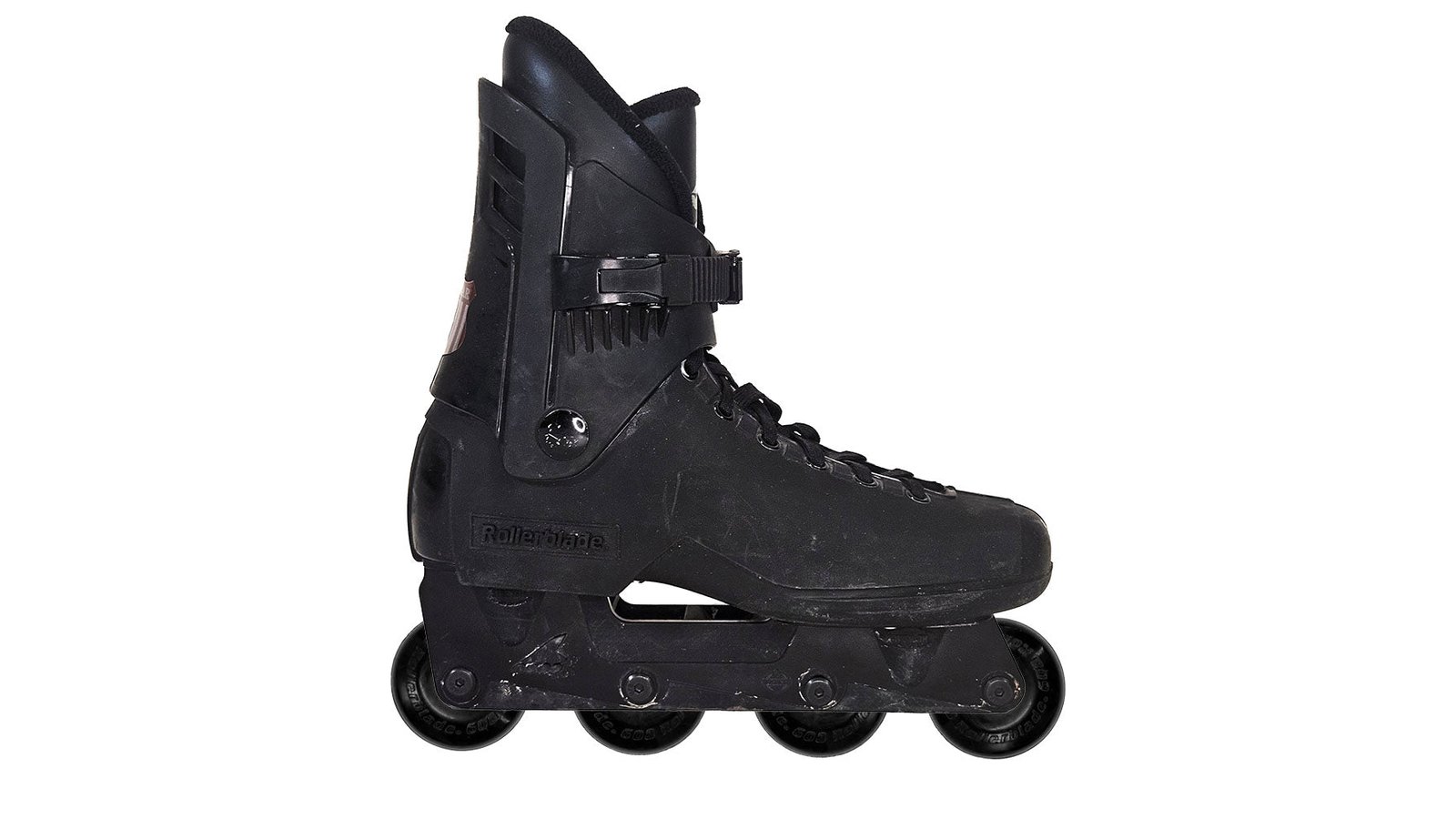
Around 1994: Rollerblade Boxcar
This Is Soul dates this vintage Rollerblade model to 1994.
The golden age: soul plates and new brands (1996-1998)
By the mid-1990s, aggressive skating had become a sport of its own. Skates gained grind surfaces under the sole, and brands dedicated to aggressive skating appeared, such as USD and Razors.
1996: Roces Majestic 12 (M12)
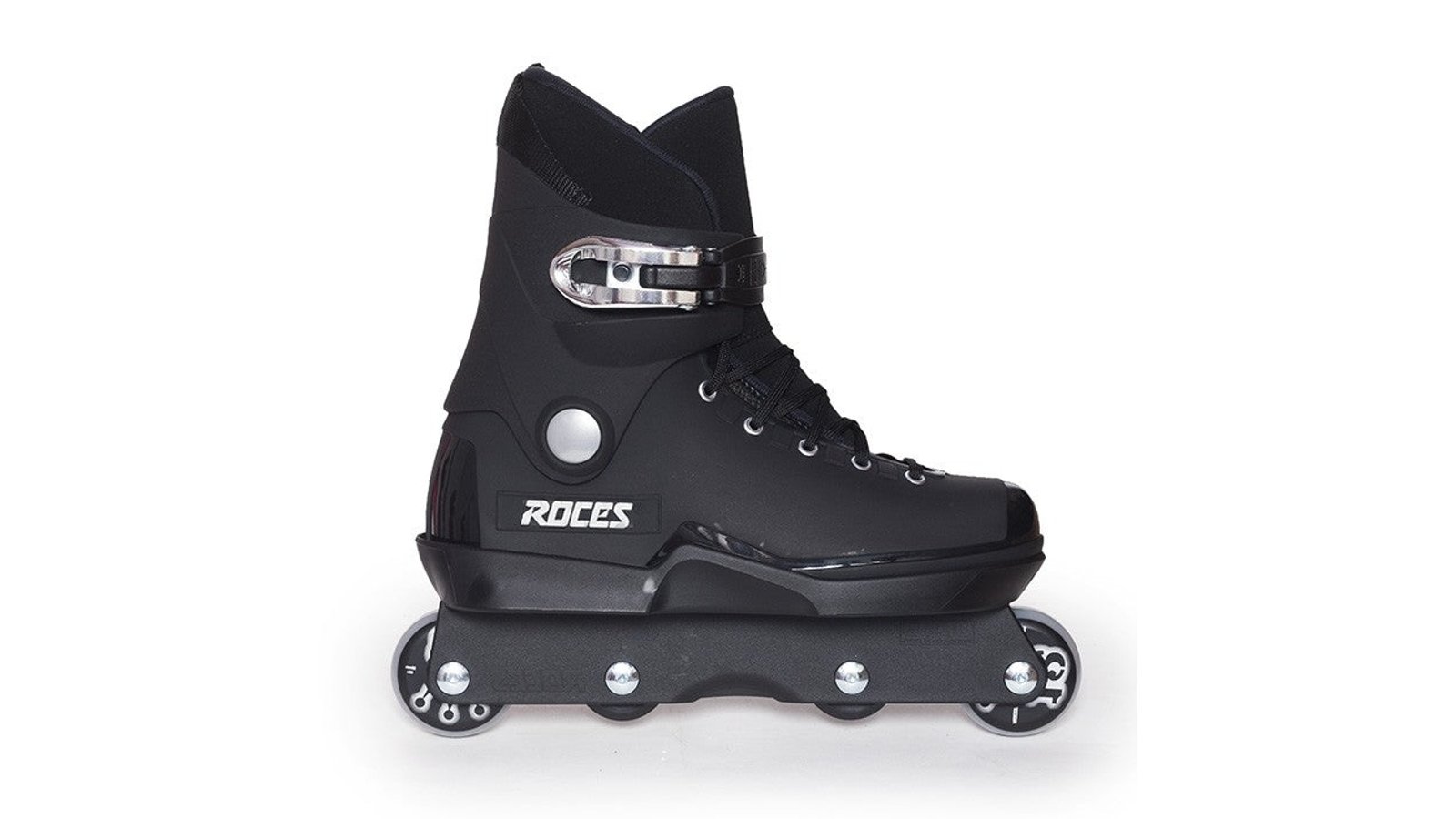
The M12 came out in 1996, according to This Is Soul. Its shell comes from an ice skate of the late 1970s. Its small-wheel frame keeps the skate close to the ground. Roces brought it back under its original name in 2013.
1996: K2 Fatty
The K2 Fatty came out in 1996, according to Wikipedia. It was one of the first skates with a base plate under the boot, one of the solutions that led to the soul plate, according to Bladeville.
Fifteen years later, in 2011, Roller en ligne still describes it as one of the oldest street skates on sale, semi-soft and very manoeuvrable.
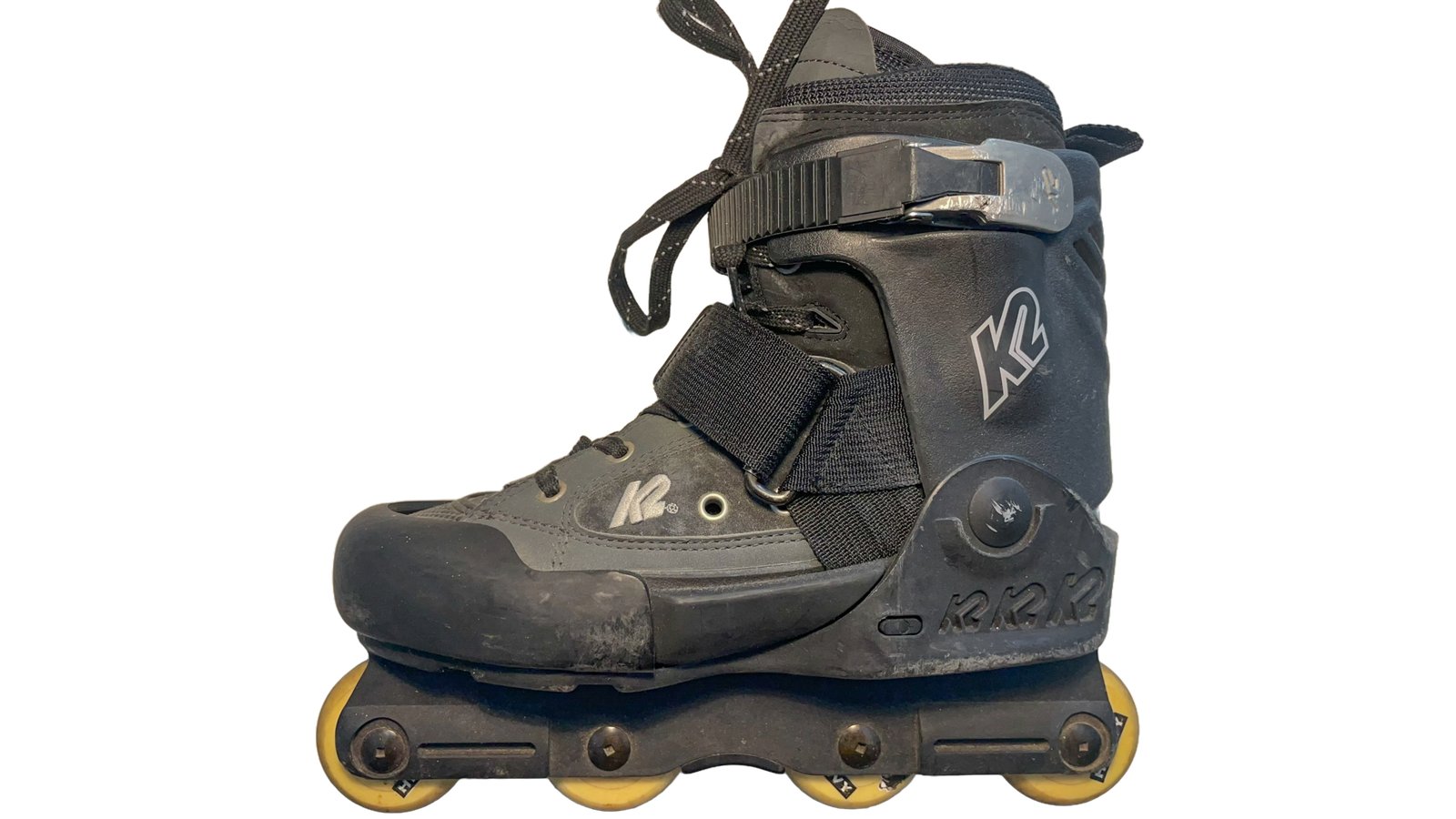

Rollerblade also released the Trooper, including a Chris Edwards version. Chris Edwards joined Team Rollerblade at a young age and turned pro in 1995, according to Wikipedia.
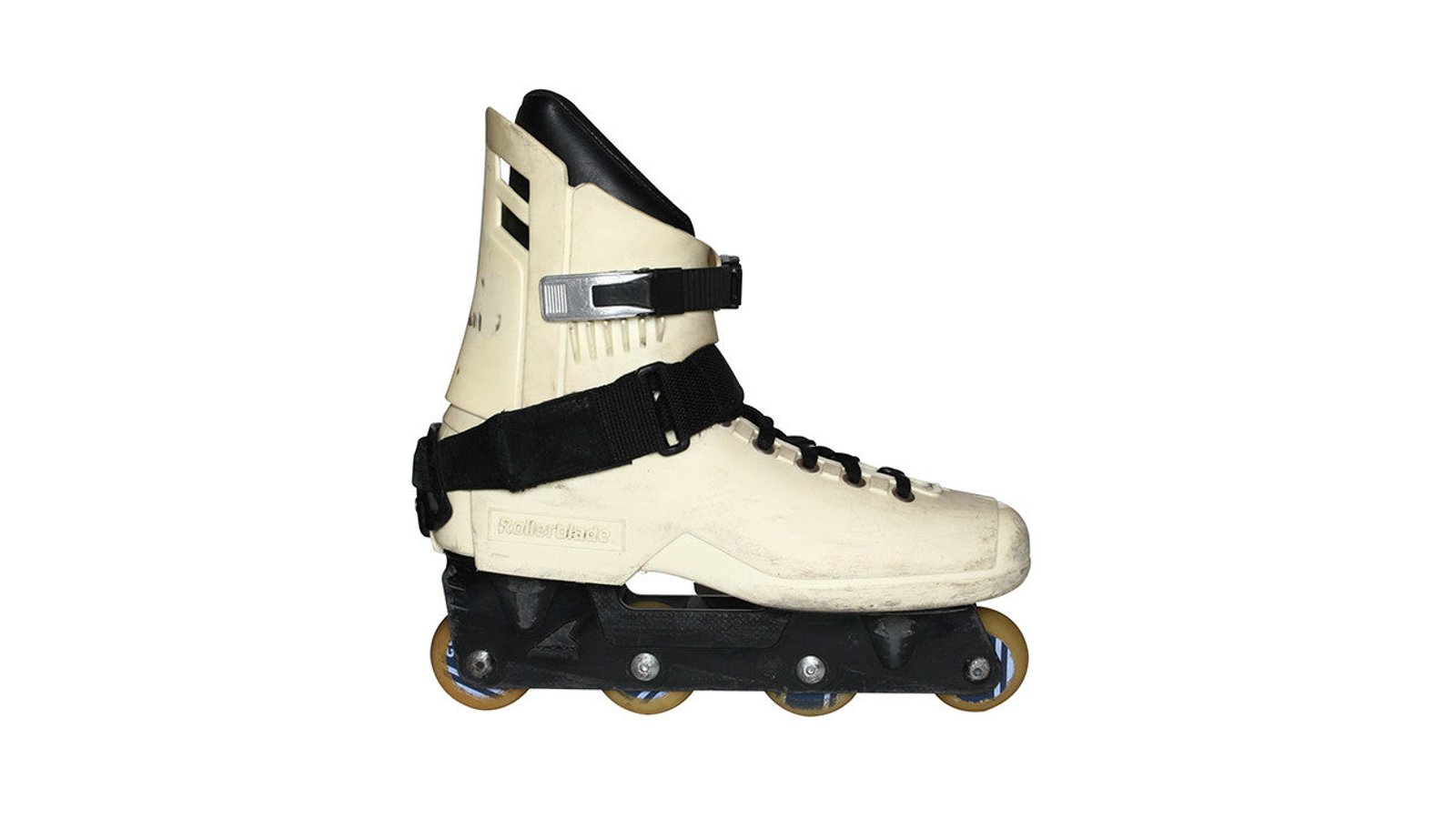
1997: Roces 5th Element and the birth of USD
Roces releases the 5th Element, Arlo Eisenberg's pro model, with a one-piece "soulframe", according to Bladeville. The same year, the UPSIDEDOWN brand, later USD, launches on July 29, 1997, according to Slide Inline.
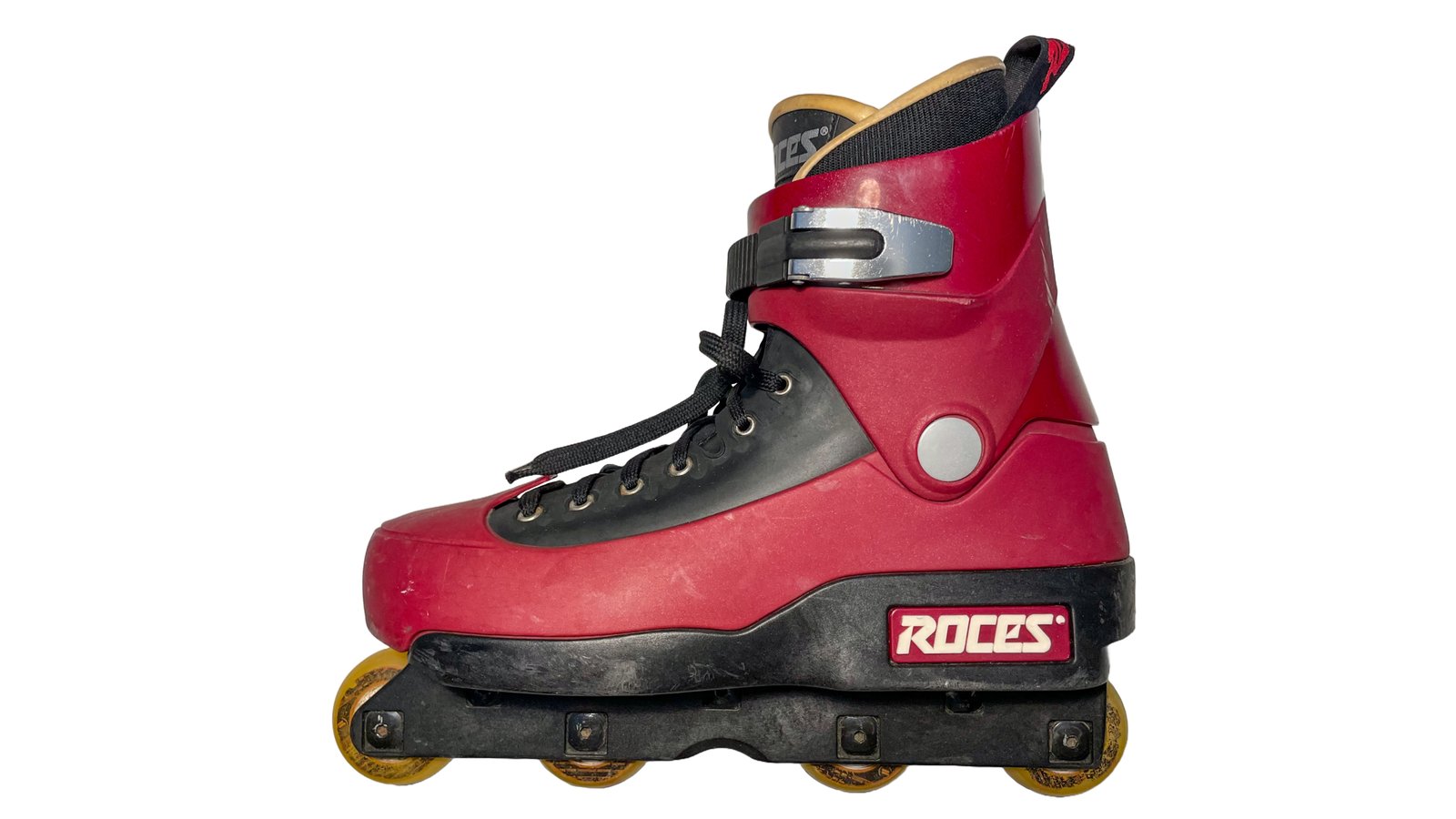

1998: Razors Cult and Salomon ST9
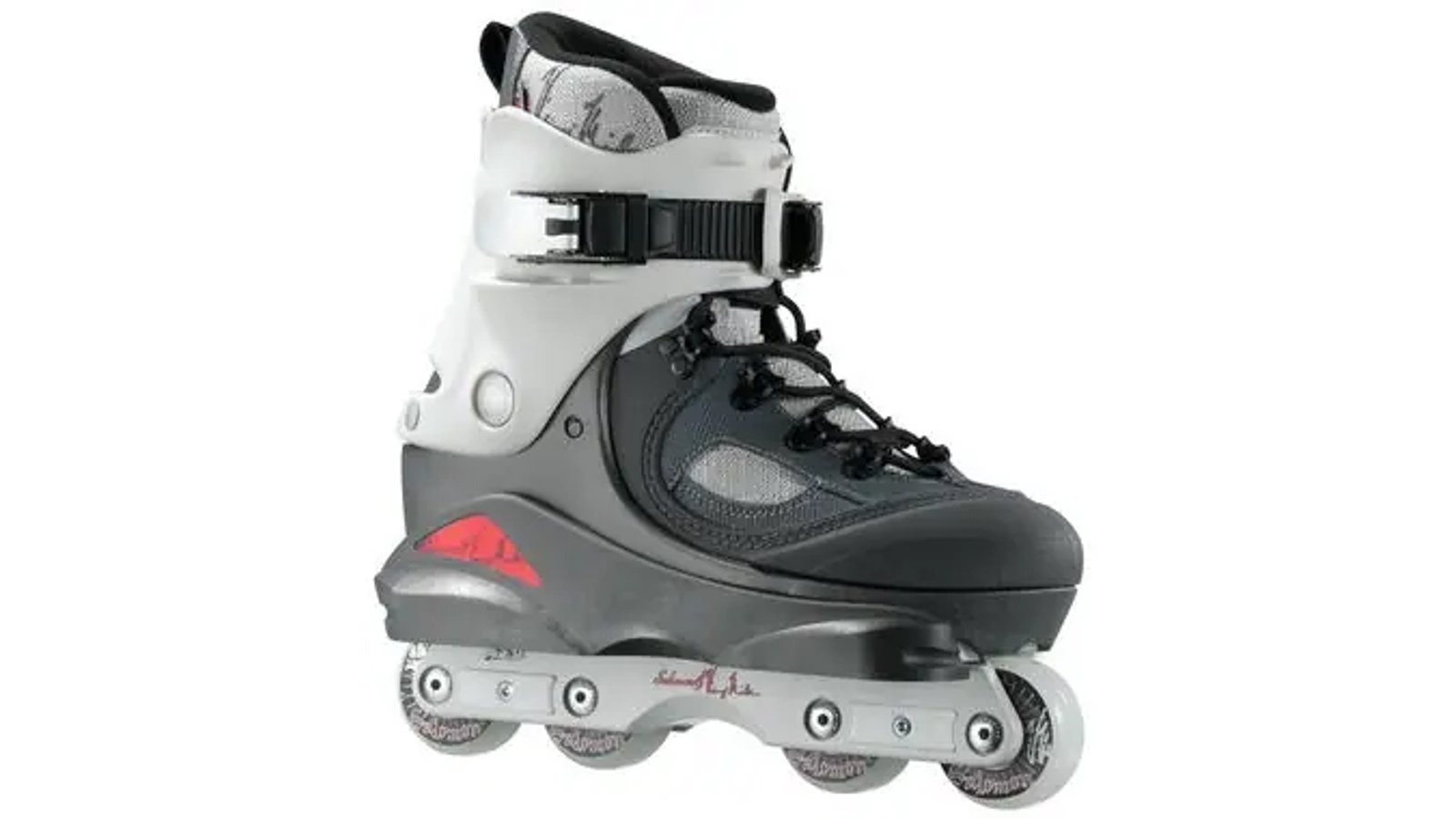
Razors releases the Cult in 1998, according to This Is Soul. Salomon releases its baby blue ST9 the same year, according to Wikipedia.
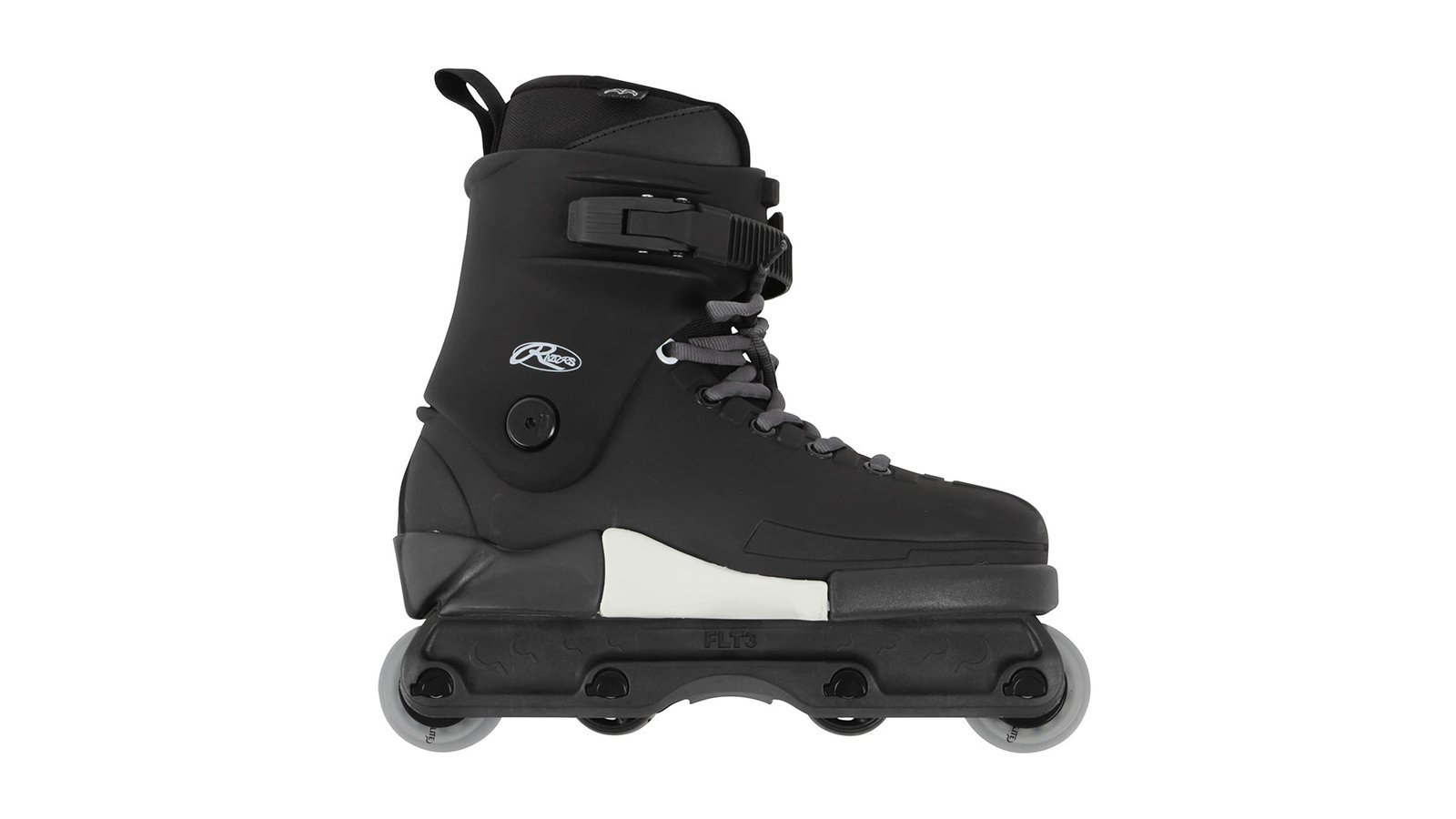
The UFS standard: one frame for every boot (1999-2002)
Until then, each brand had its own mounting. UFS set a single mounting format: you could finally put one brand's frame on another brand's boot.
1999: the UFS alliance and the USD Throne
USD, Kizer, 50/50 and Salomon team up to create UFS, according to Powerslide. The same year, USD releases the UFS Throne, according to Wikipedia.
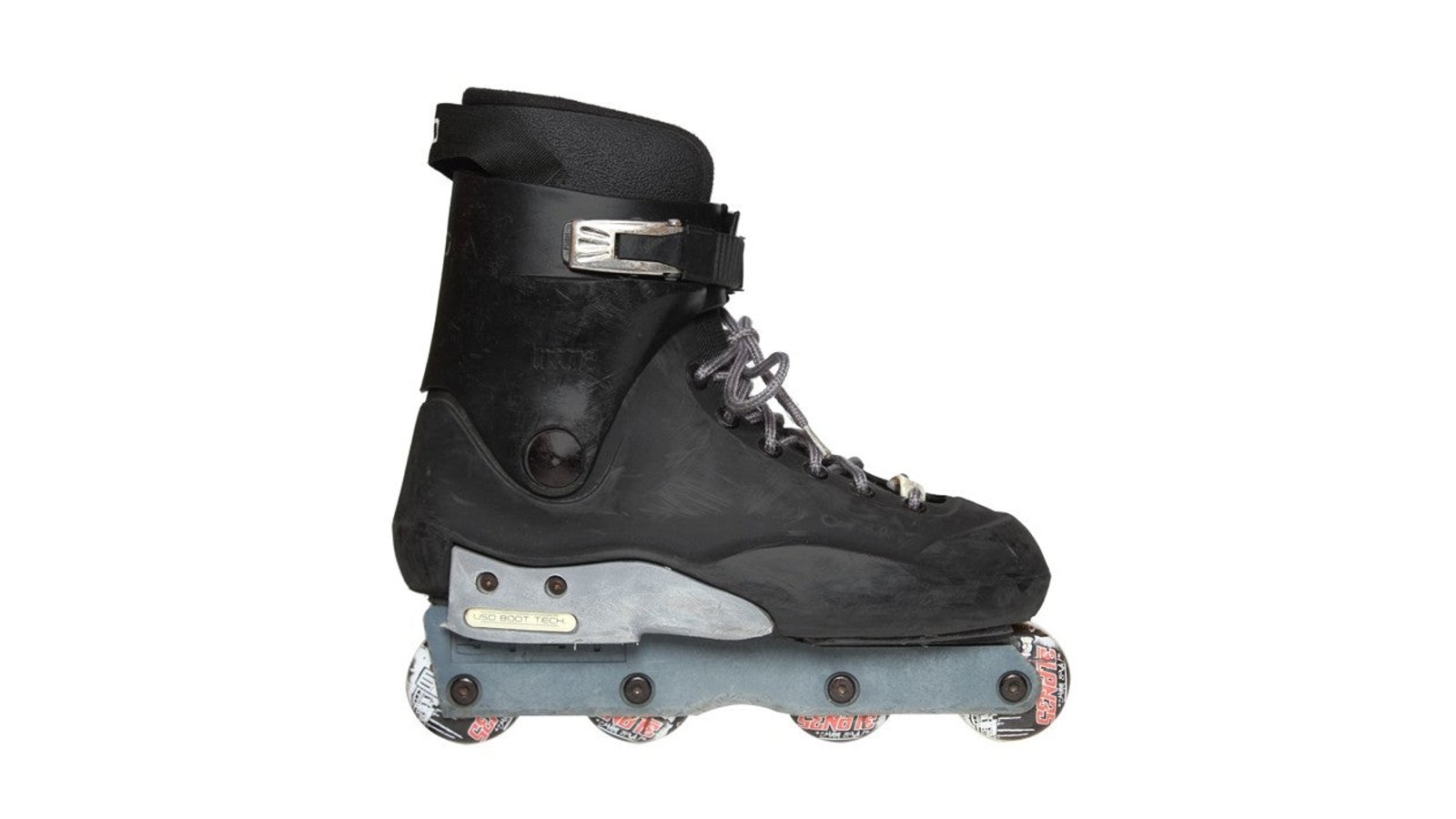
The UFS Throne is an evolution of the Throne Classic, a 1990s skate: same base, with a two-part soul plate that slides a little less but locks in better, according to Roller en ligne.
2001: the first UFS frames and the Razors Genesys
The first UFS frames arrived in 2001, together with the first compatible skate, Aaron Feinberg's Salomon pro model, according to Bladeville. Razors launches the Genesys the same year, according to This Is Soul.
At Rollerblade, This Is Soul dates the Swindler to 2001.
Did you know? Before Remz, there was Out: the Poppy was the brand's very first skate, according to This Is Soul.
The 2000s: lighter, softer, freer (2003-2013)
Once frames were standardised, brands worked on the boot: soft boots, lighter shells, carbon, and brands created with pro riders, such as Valo with Jon Julio.
2003: Xsjado and the M12's first soul plate
Xsjado releases Chris Farmer's pro model in 2003, according to Wikipedia. The idea: attach the skater directly to the soul for better mobility, according to Rollernews. The same year, the M12 gets its first soul plate and Roces creates Valo with Jon Julio, according to This Is Soul.
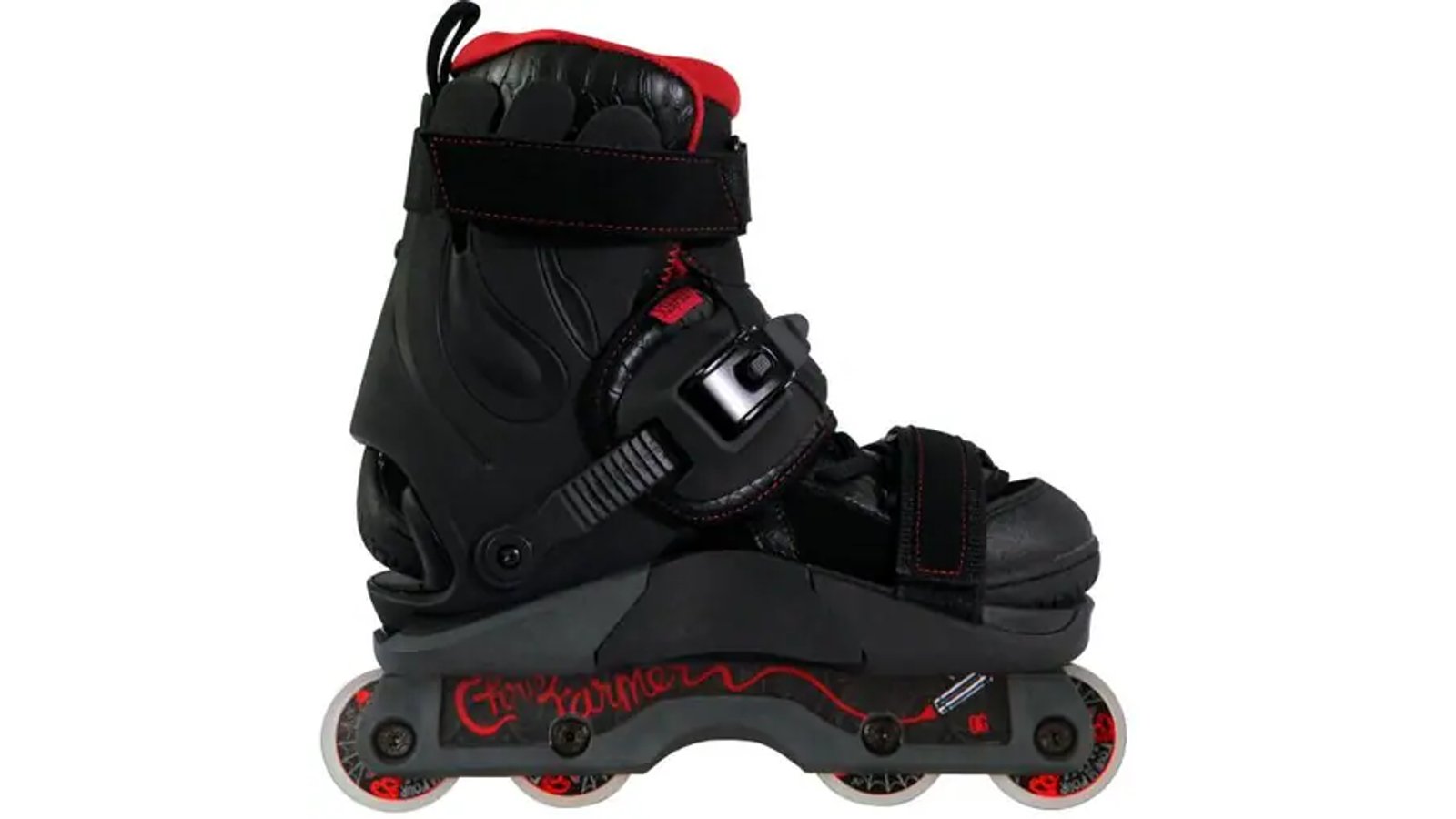
For Roller en ligne, the Xsjado was "the revolution of the 2000s": a skate you wear your own shoe in, for maximum comfort.
2008: Razors SL
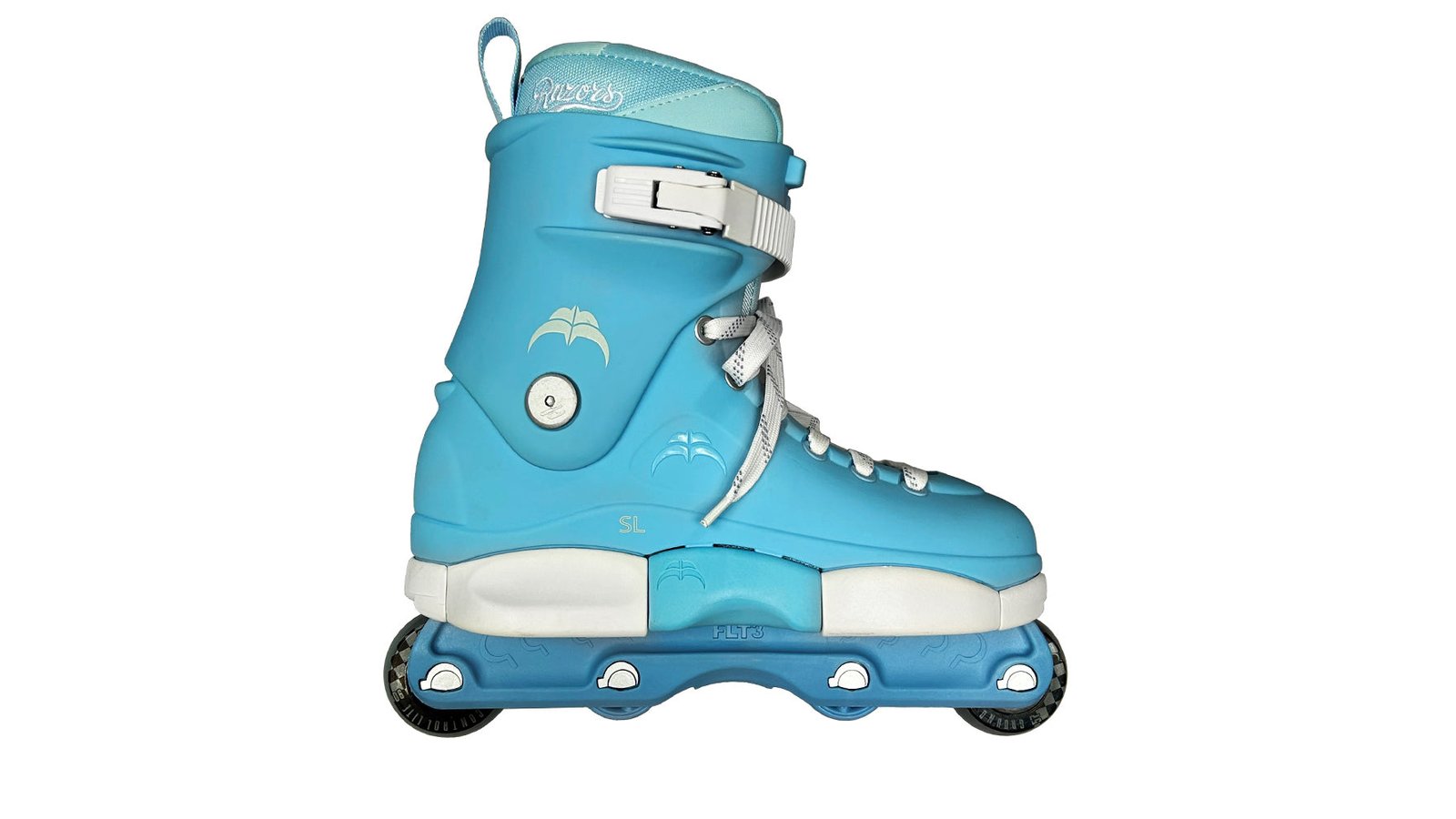
Razors releases the SL (Super Light), with a shell that lets you feel the ground better, according to This Is Soul.
2008-2009: Deshi and the first carbon aggressive skate
Deshi led the way on carbon. In 2008, its CH1 added carbon elements to the shell, according to Rollernews. Then came the Deshi Carbon: for Roller en ligne, which tested it in May 2009, it was "a first for aggressive skating". The boot is carbon and Kevlar, has no liner and weighs under a kilo, against more than 1.3 kg for the CH1.
In June 2009, Deshi joins USD, according to Rollernews.
Around 2009: USD Carbon
USD releases its Carbon model around 2009, according to Wikipedia. The brand presents itself as the first to sell carbon skates, according to Slide Inline.
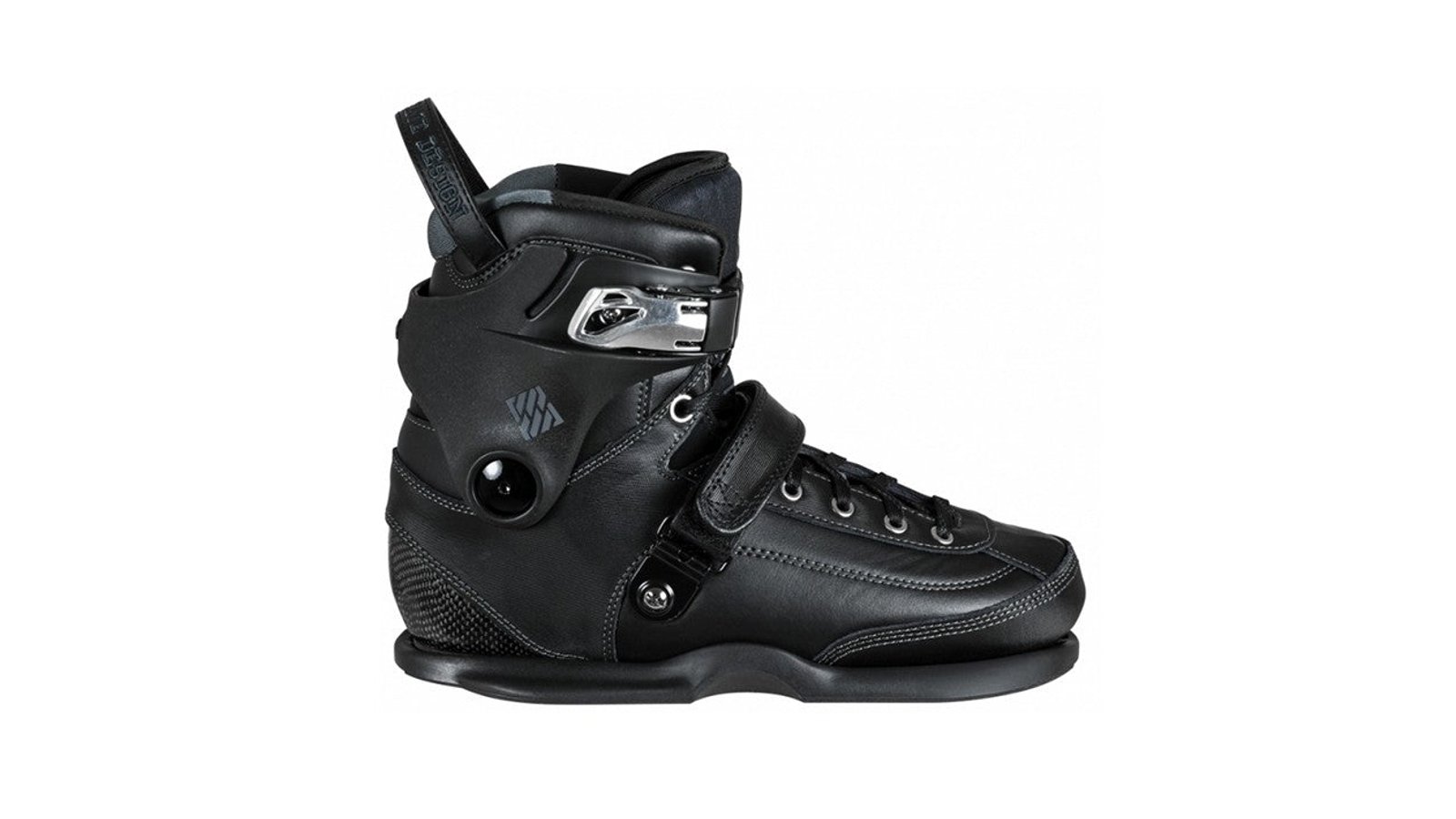
Roller en ligne points out that while USD was the first brand to use carbon in street skating, Deshi really created the concept in aggressive skating.
2011: the market according to Roller en ligne
In November 2011, Roller en ligne sorted street skates into three price ranges:
- Under €200: Razors Cult, Rollerblade New Jack, K2 Fatty and USD Seven.
- €200 to €250: Razors Genesys, USD Throne Classic, Rollerblade Solo Hype, Xsjado, Remz OS, Valo TV2 and Shima Skate.
- Over €250: USD Imperial, USD Carbon Free, USD Carbon 2 and 3, Xsjado pro models, Razors SL, Remz Chris Haffey 2.2 and Valo Light J.J.
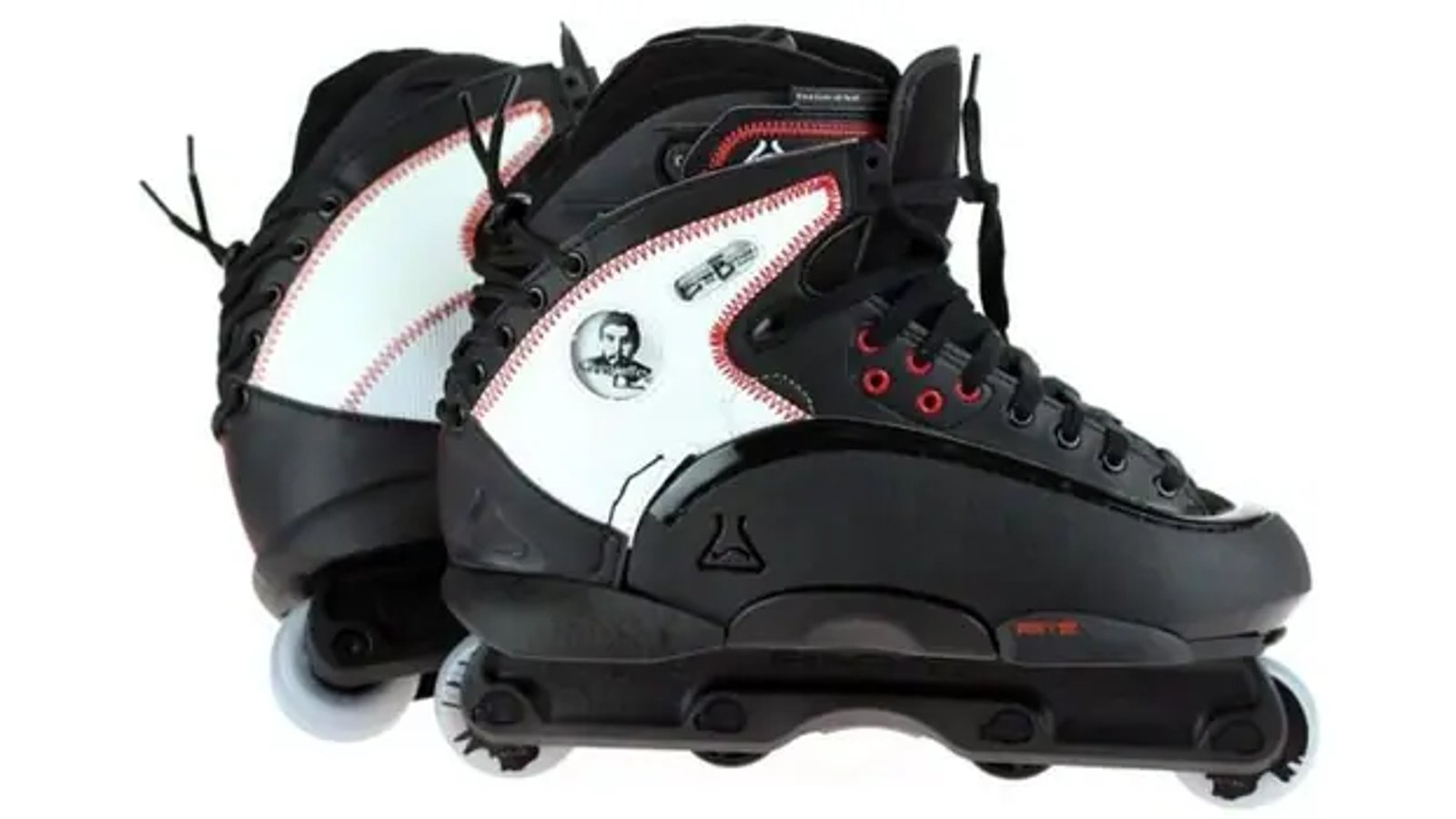
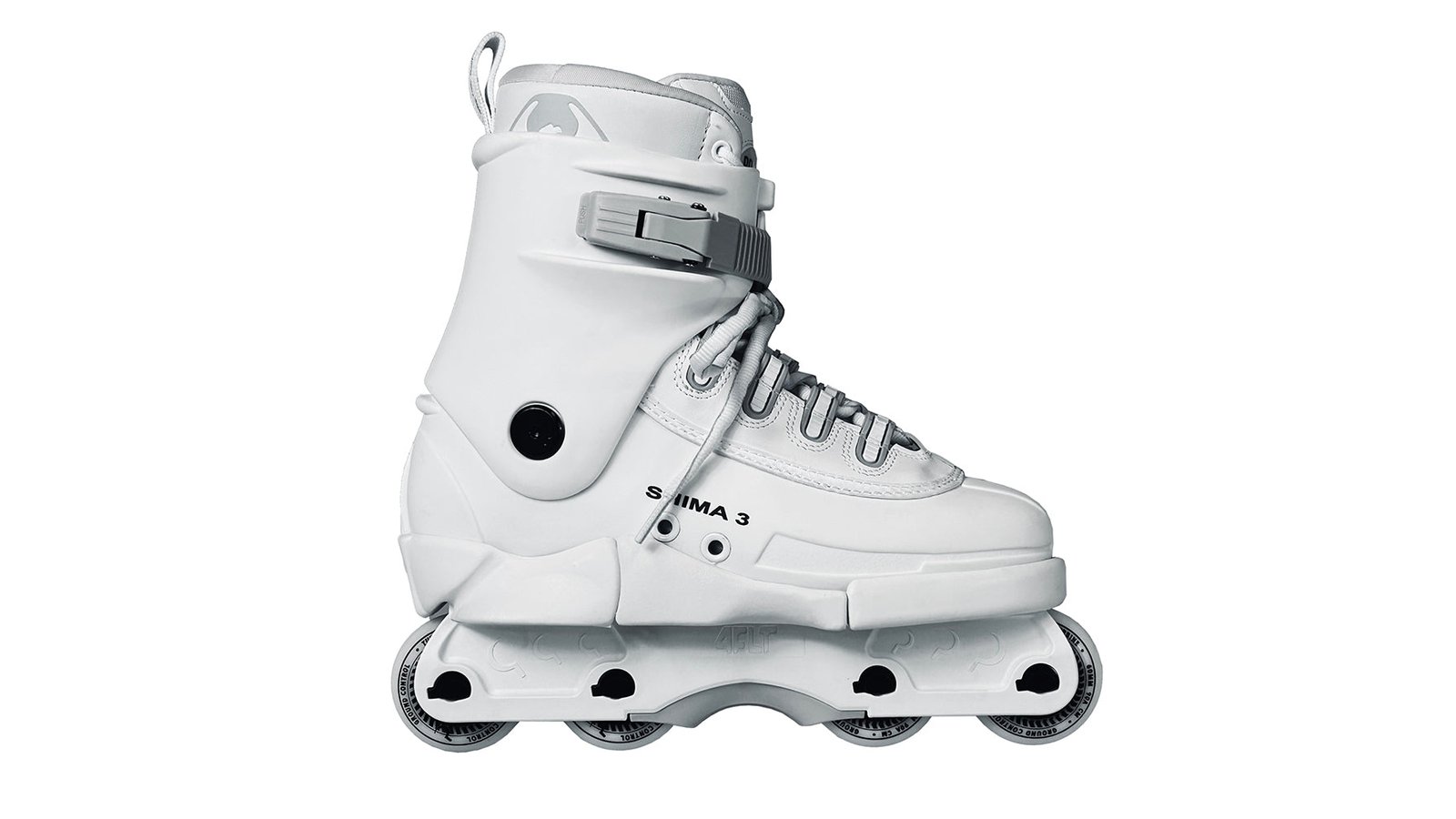
Two trends stand out. The overboot, an extra shell fitted over the boot: the Valo TV2 is a variant of the Roces Majestic with an overboot, and the Shima Skate uses a Razors base with an overboot. And carbon, at USD as well as Valo with the Light.
2013: the Roces M12 returns
Roces brings back the M12 under its original name, according to This Is Soul.
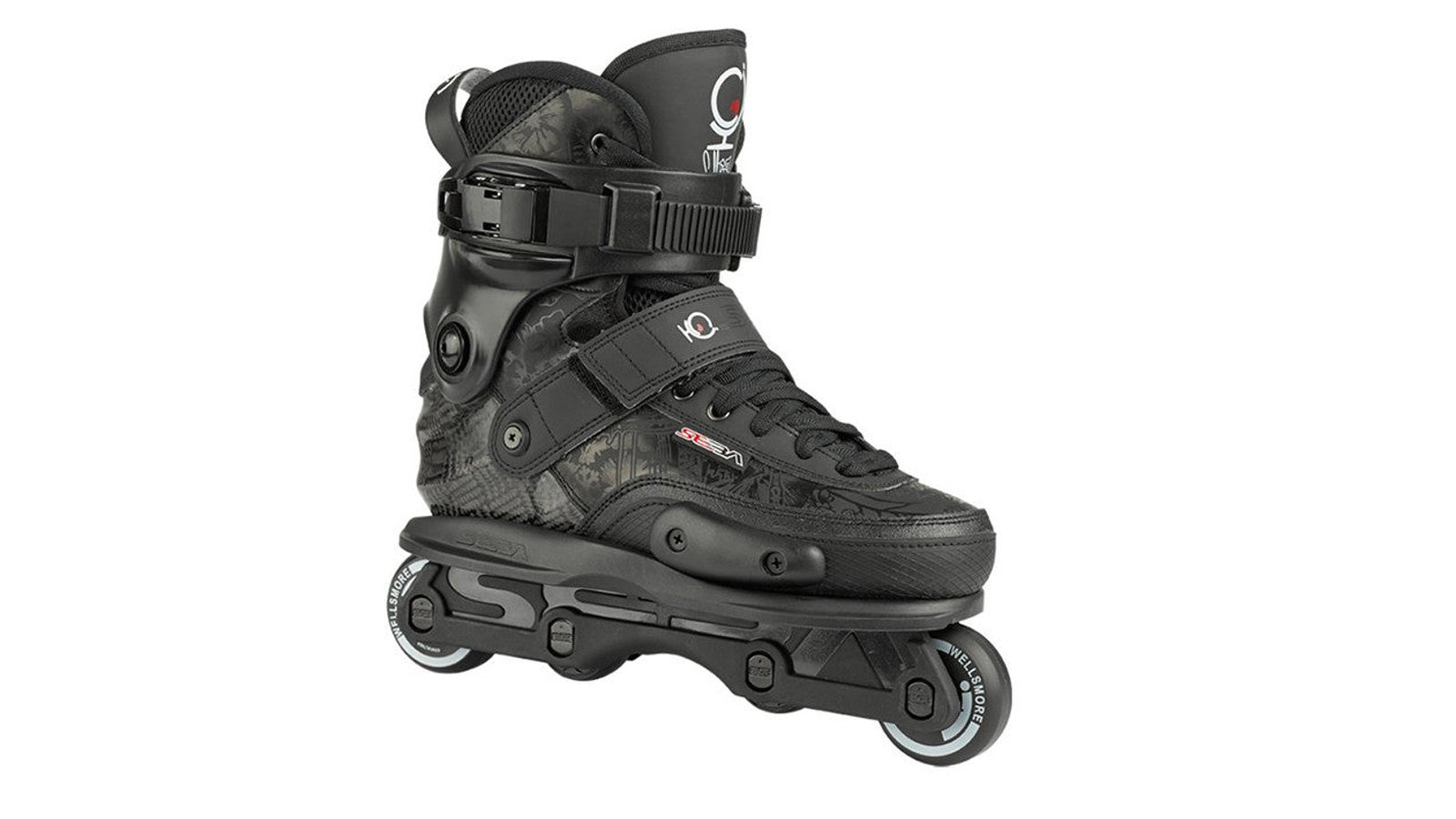
The same year, Seba also moved into aggressive skating with C.J. Wellsmore's pro model, which has a carbon boot, according to Roller en ligne.
The 2010s: unibody and big wheels (2014-2017)
Riders wanted more speed in the street. Wheel sizes went up, and some brands dropped UFS for a one-piece boot.
2015: USD Aeon
The Aeon moulds the boot and frame in one piece: you can't replace the frame without replacing the boot, according to Roller en ligne. Fewer parts make a lighter, more precise skate. USD no longer wanted to stick to 60 mm wheels and offered a 72 mm version.
Around 2016: Roces M12 Lo, USD Sway and Gawds Franky Morales Pro
Models released that year, according to Wikipedia: Roces M12 Lo, USD Sway, Gawds Franky Morales Pro and Remz Nils Jansons Pro.
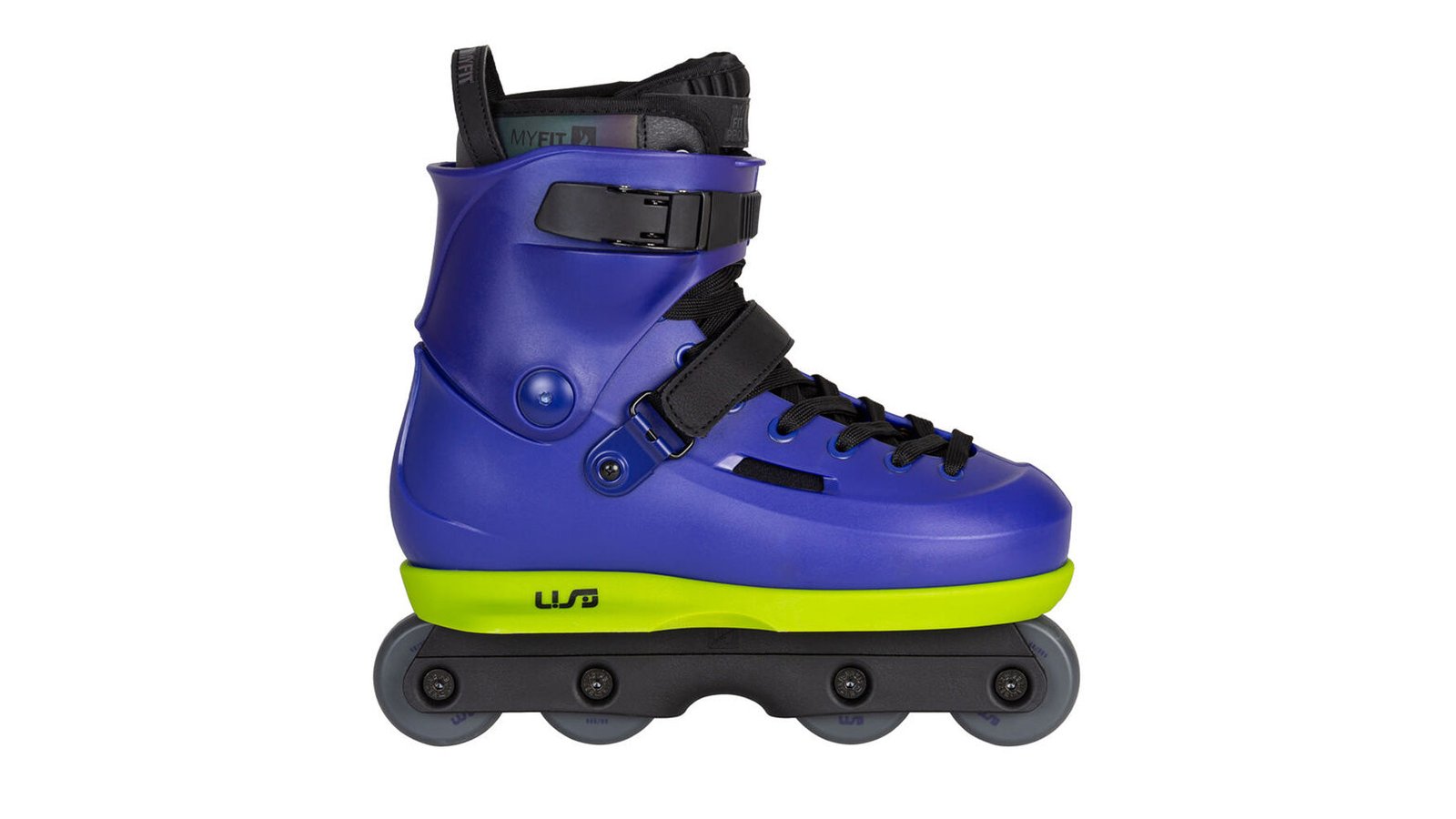
K2 also comes back with the Unnatural, part of its 2016 collection, according to Be-Mag. K2 positions it as its pro-level skate, according to ONE Blade Mag.
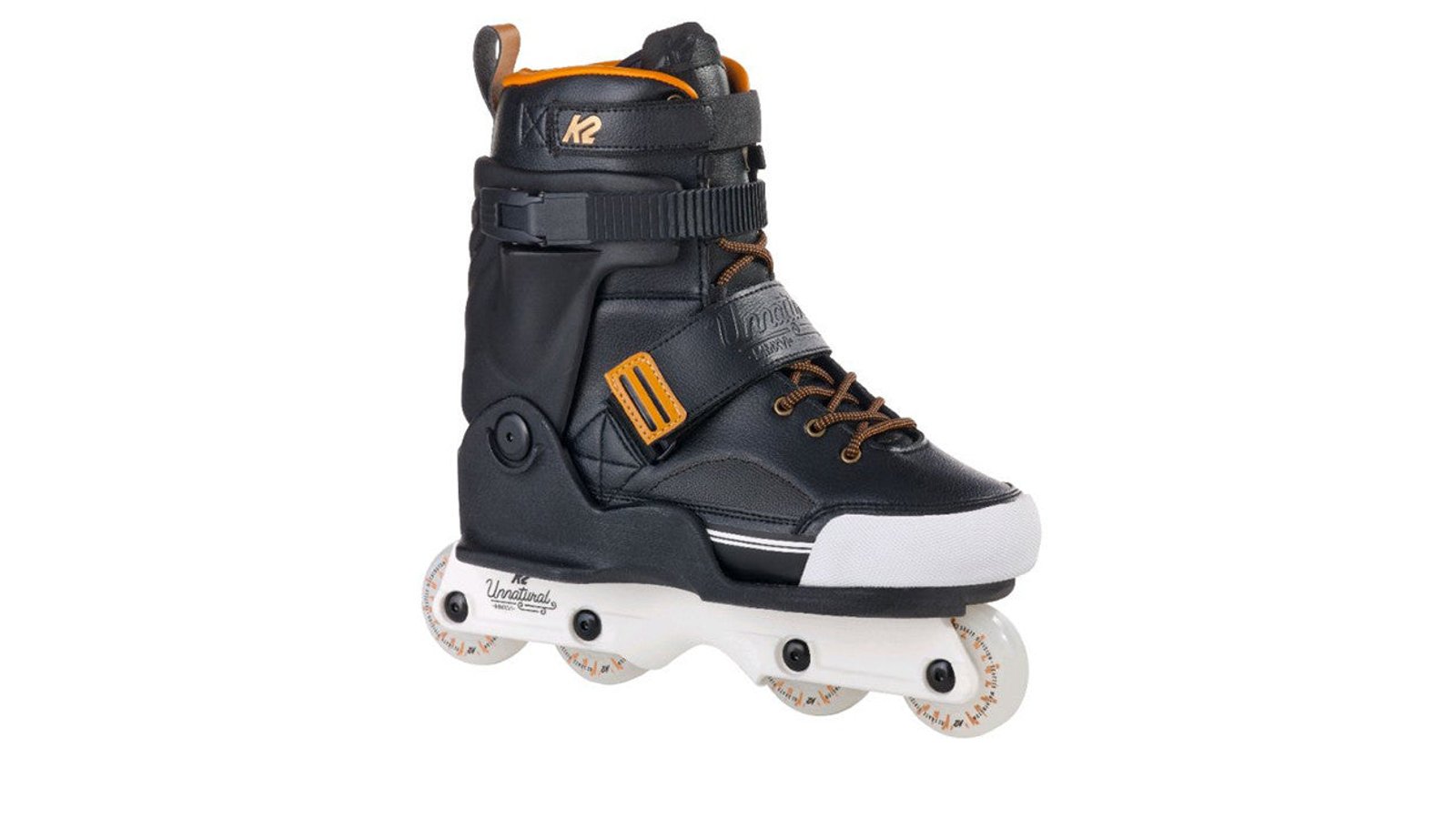
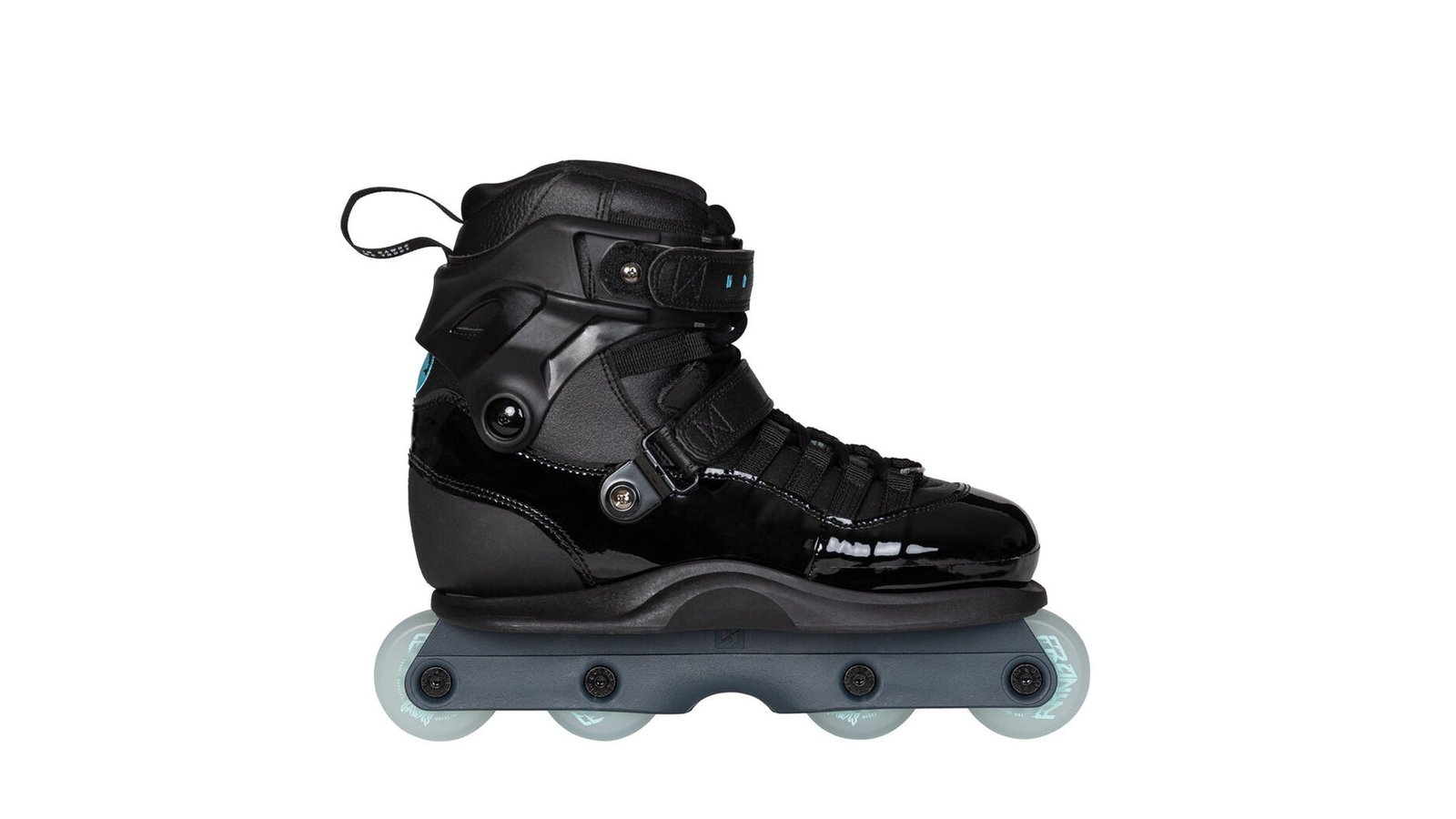
Gawds is the aggressive skate brand created by Franky Morales, in cooperation with Powerslide, with a boot inspired by the Air Jordan XII, according to Bladeville. In 2021, it came under the Disroyal umbrella while keeping ties with Powerslide. In 2024, Franky Morales brought back his FM 5, more than a decade after its release with USD, this time on a Gawds boot, according to This Is Soul.
2017: Razors Shift and USD turns 20
Razors releases the Shift in 2017, according to Wikipedia, with a quick-change frame system, according to This Is Soul. USD celebrates its 20th anniversary, according to Slide Inline.
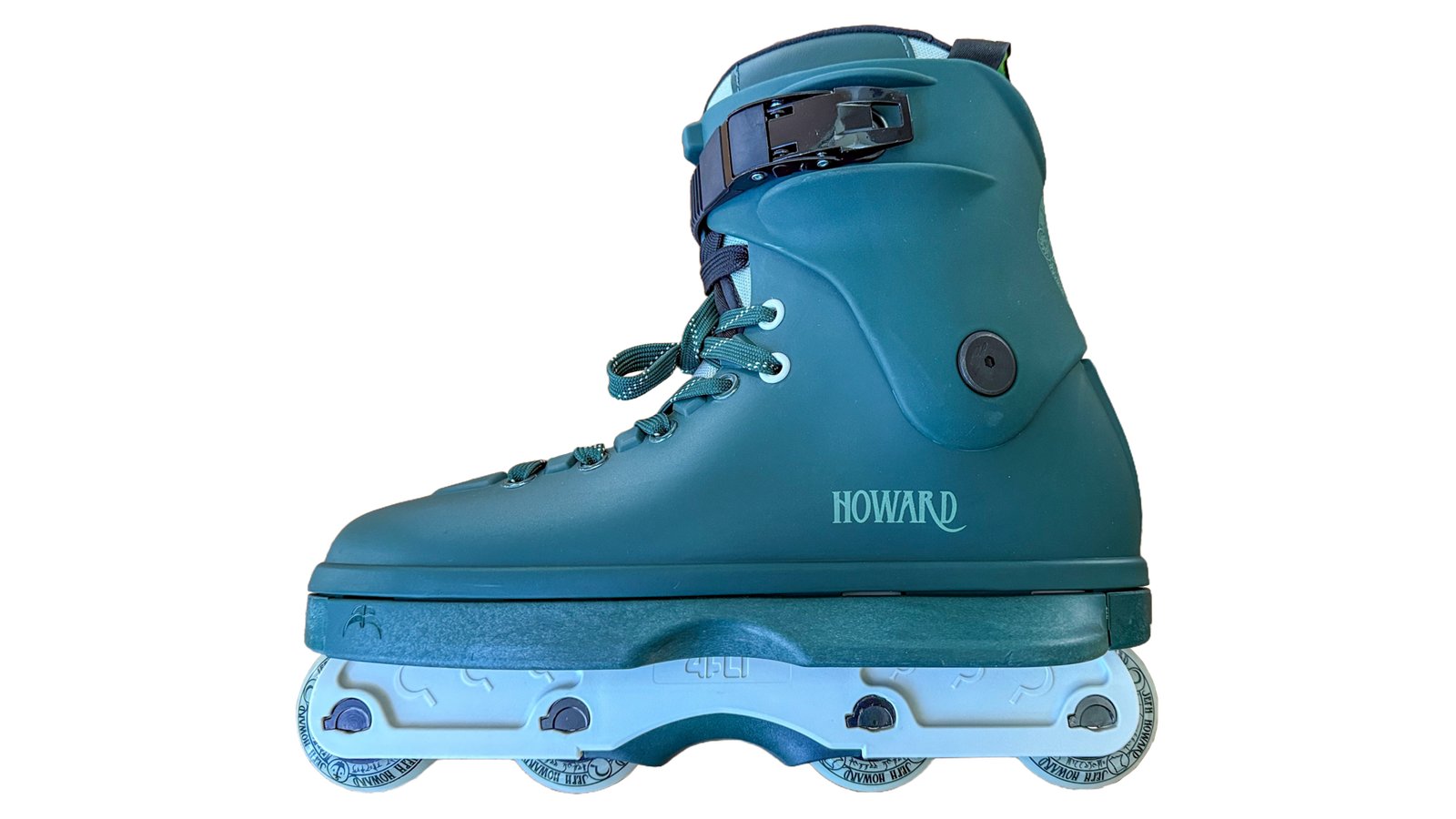

Did you know? When it came out, the K2 Unnatural "looks like a Vans", noted ONE Blade Mag.
Today: new brands and new standards (2018-2026)
A new generation of brands brings back street culture and customisable boots. The mounting standard is also evolving to fit bigger wheels.
2018: Them Skates 908
In early 2018, Jon Julio ends Valo, after more than a decade, and founds Them Skates. The first 908 came out in June 2018, according to Be-Mag.
UFS+: a longer mounting
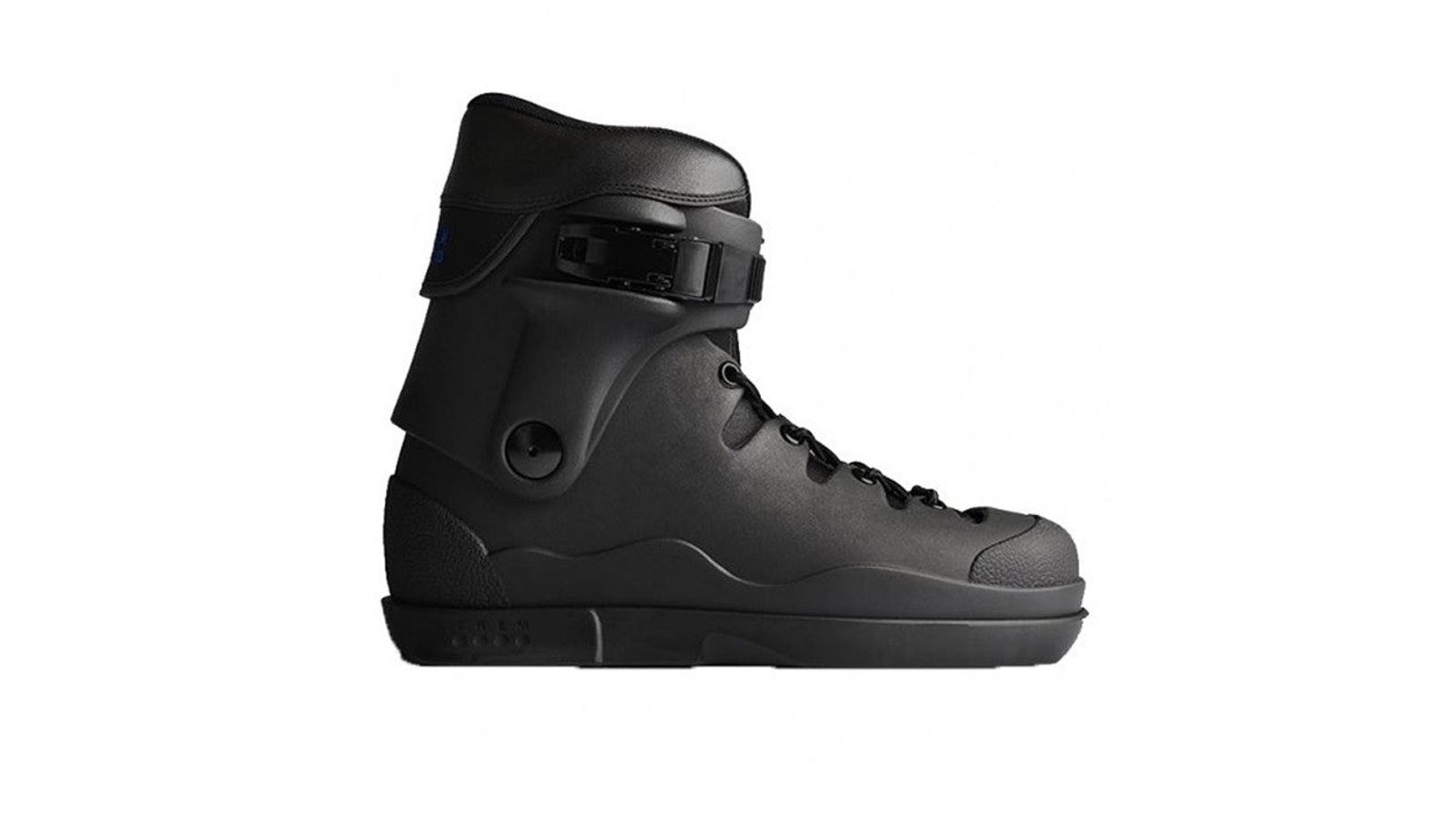
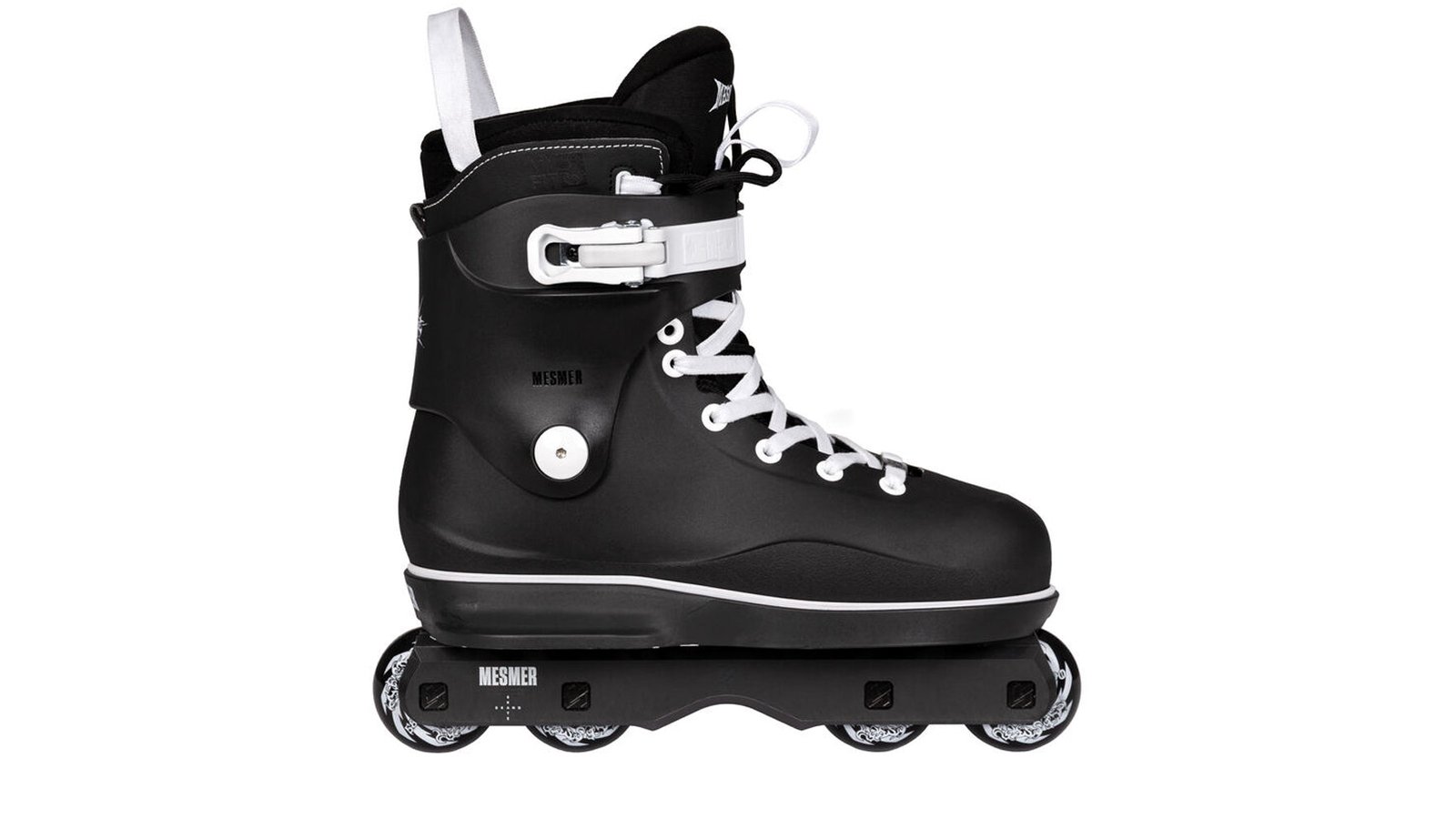
UFS+ adds a second mounting distance of about 200 mm next to the standard 167 mm, for bigger frames, according to Clic-n-Roll. Mesmer Eclipse and Iqon Jaro boots and the Kizer Lowrider frame are compatible.
Around 2019: Rollerblade Blank
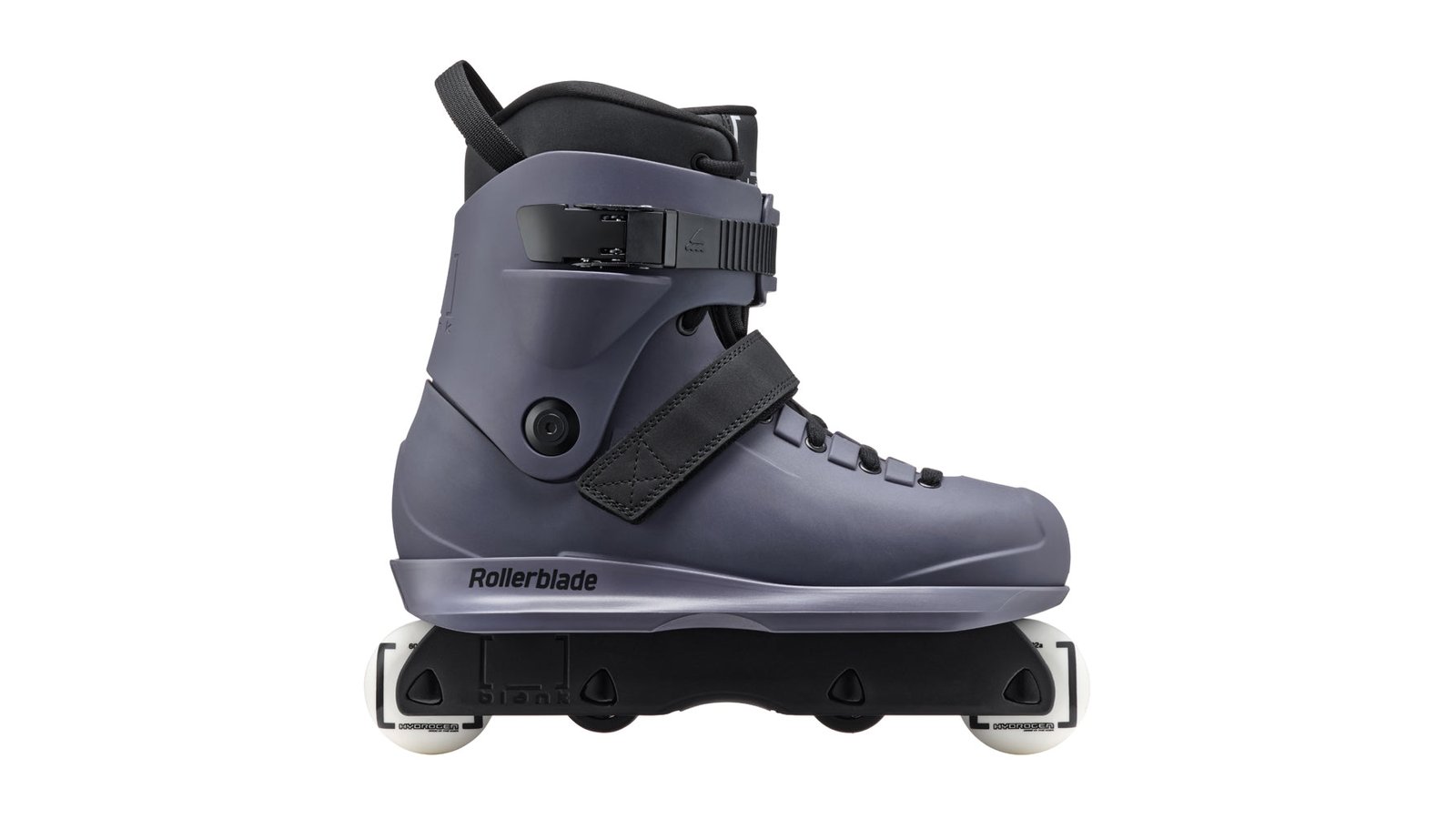
Rollerblade developed the Blank with and for its international street team, the Blank International Street Team, according to This Is Soul.
Around 2020: Them 909
Jon Julio released the first official pictures of the 909 in summer 2019, according to Be-Mag. Unlike the 908, it comes from a mould made for Them, according to This Is Soul. Bladeville lists the changes: harder plastic than the 908, a redesigned cuff and standard lacing.
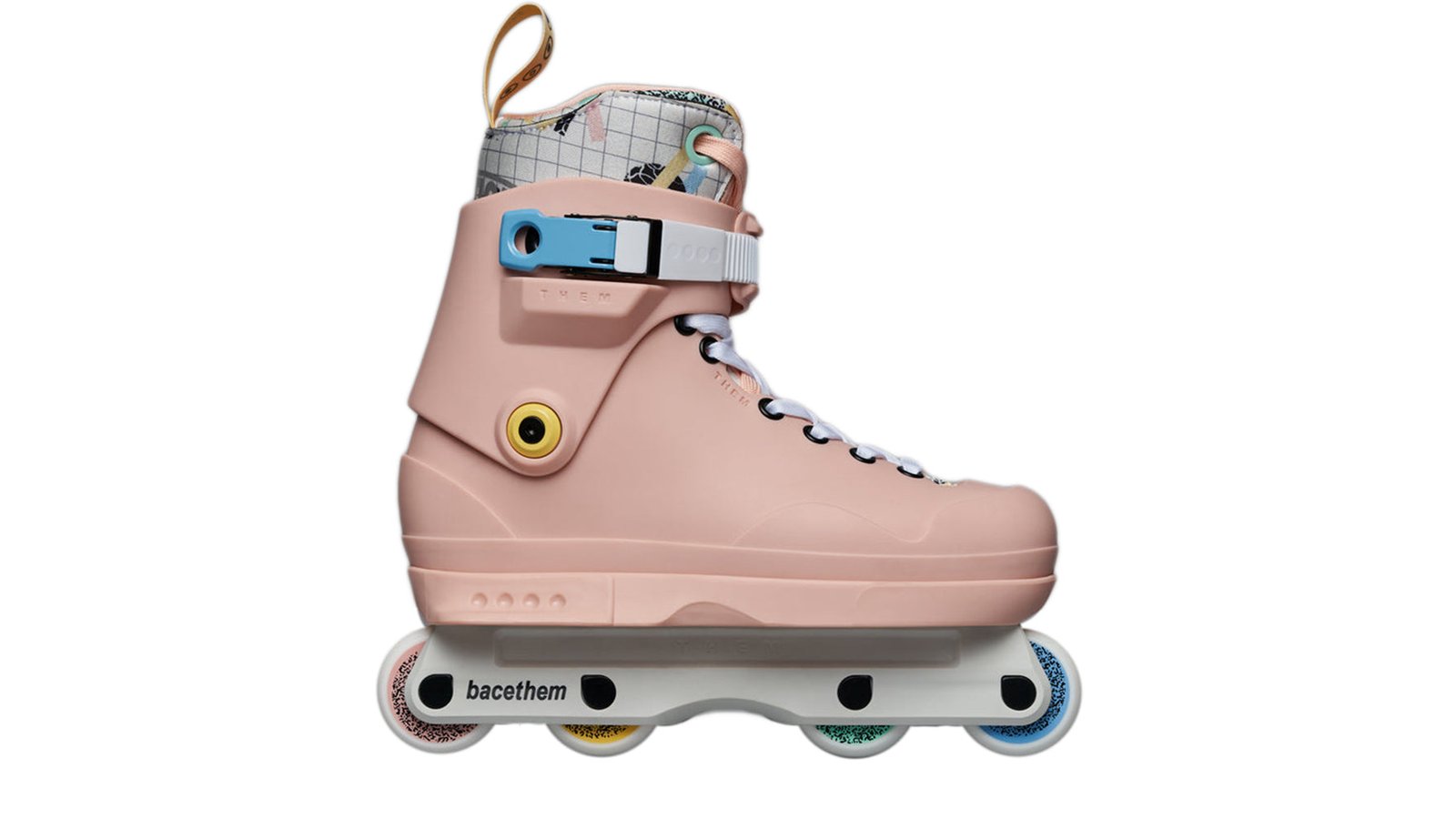
Adapt Brutale: the handmade skate
Adapt builds its skates one by one in a small workshop in the Netherlands, according to Blader Union. In 2020, the site presents the Brutale as one of its most technical models, with a carbon composite shell (Wikipedia's table dates it 2014). Adapt ended its handmade collection: the last orders were possible until January 21, 2024, according to Rollernews.
2021-2022: FR UFR Street, a French brand goes aggressive
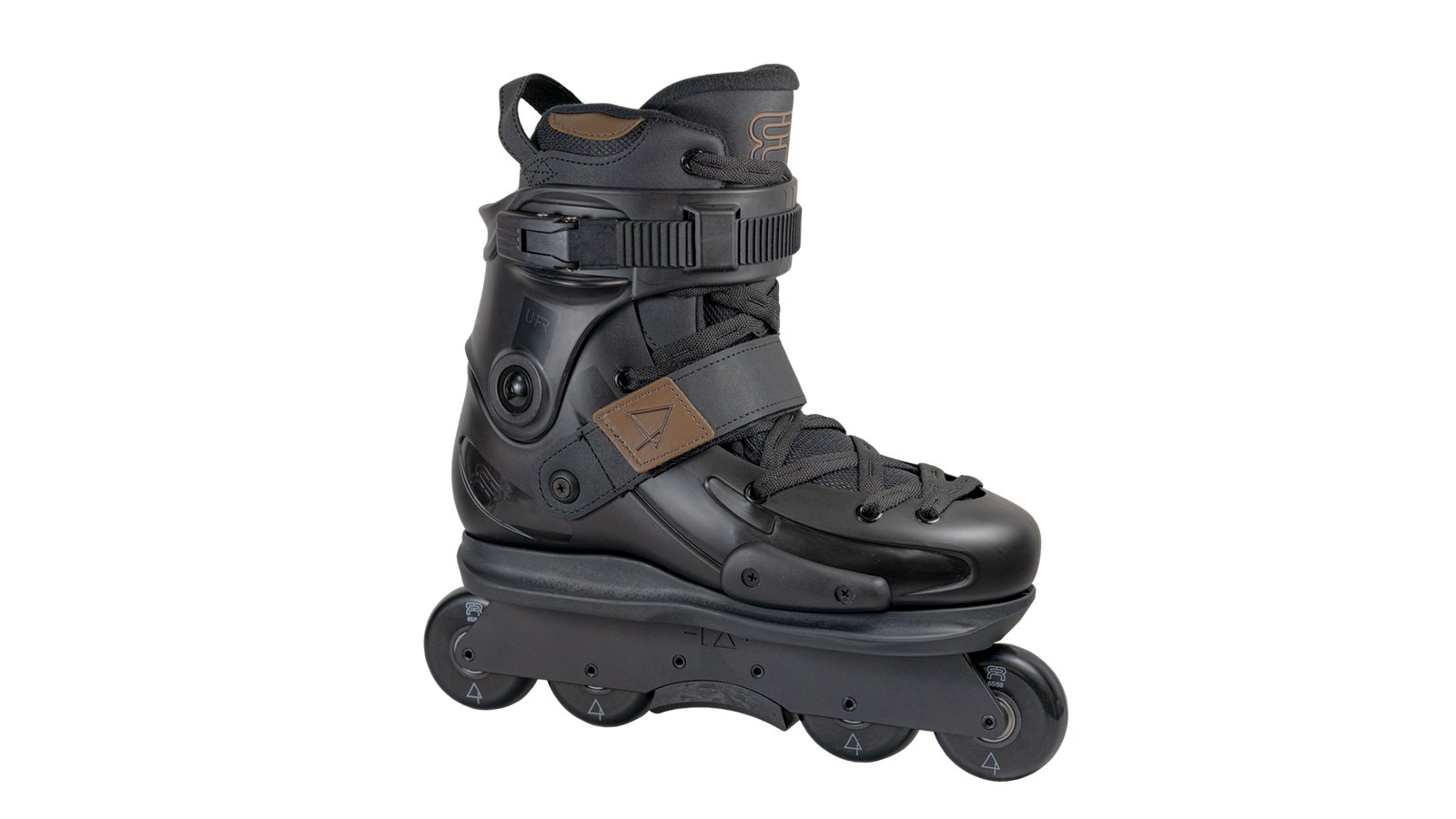
FR, born in Paris in 2006, released its first aggressive skate for the 2022 season, according to Bladeville. In late 2021, Antony Pottier's pro model took the brand's freeride boot and switched it to UFS mounting with removable soul plates, according to Rollernews.
2022: Faction Tactical V1
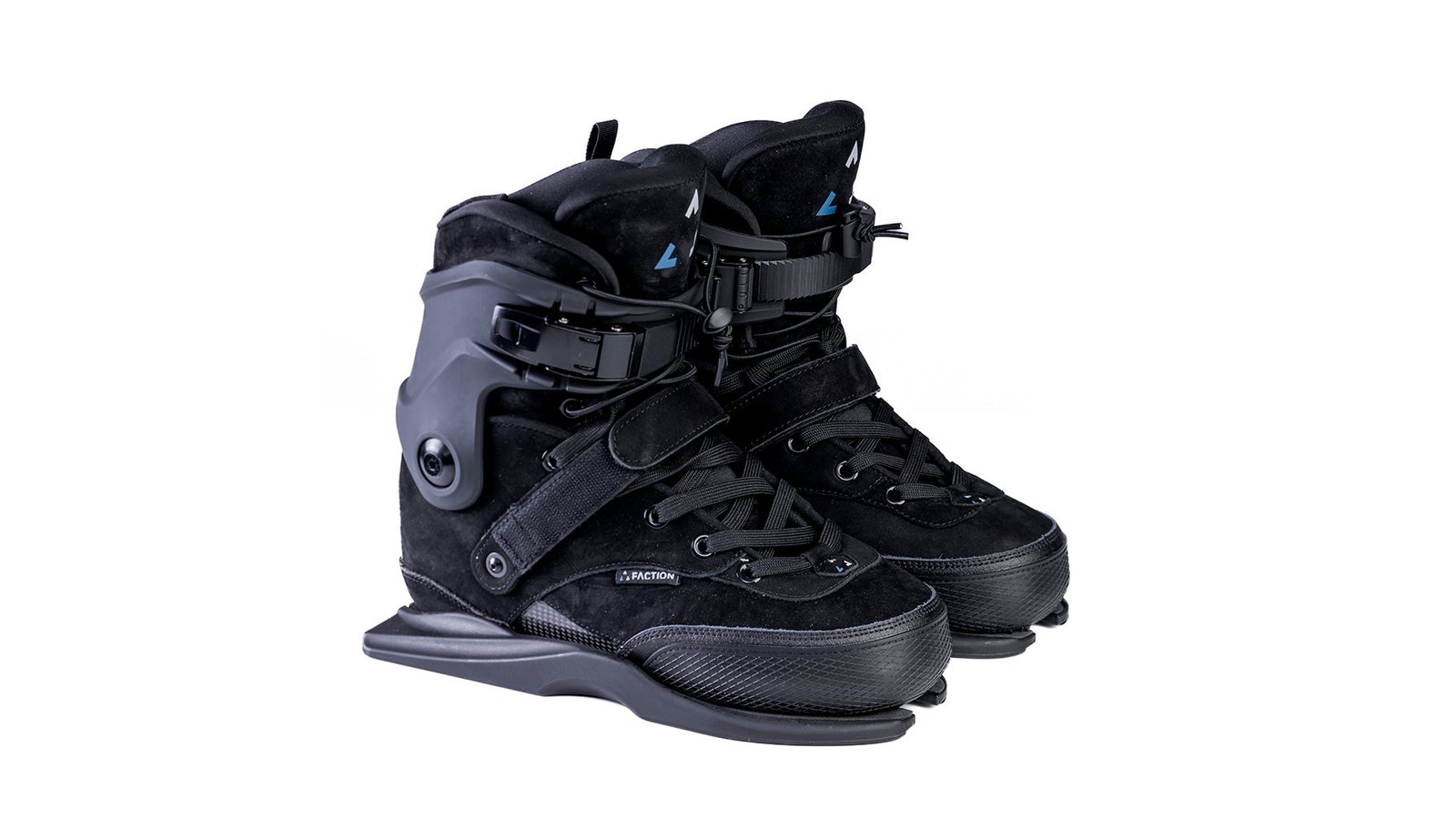
In January 2022, Faction Skate Company introduced the Tactical V1, a heat-mouldable carbon fibre boot, according to Be-Mag. The brand is skater-owned and designed the boot with Justin Thursday and Mike Rios, according to Rollernews.
2023-2024: Standard Skate Omni
In September 2023, Standard introduced the Omni, its first skate, with deliveries from November, according to Rollernews (Wikipedia's table dates it 2024). It uses eight new moulds and a flat heel with built-in shock absorption.
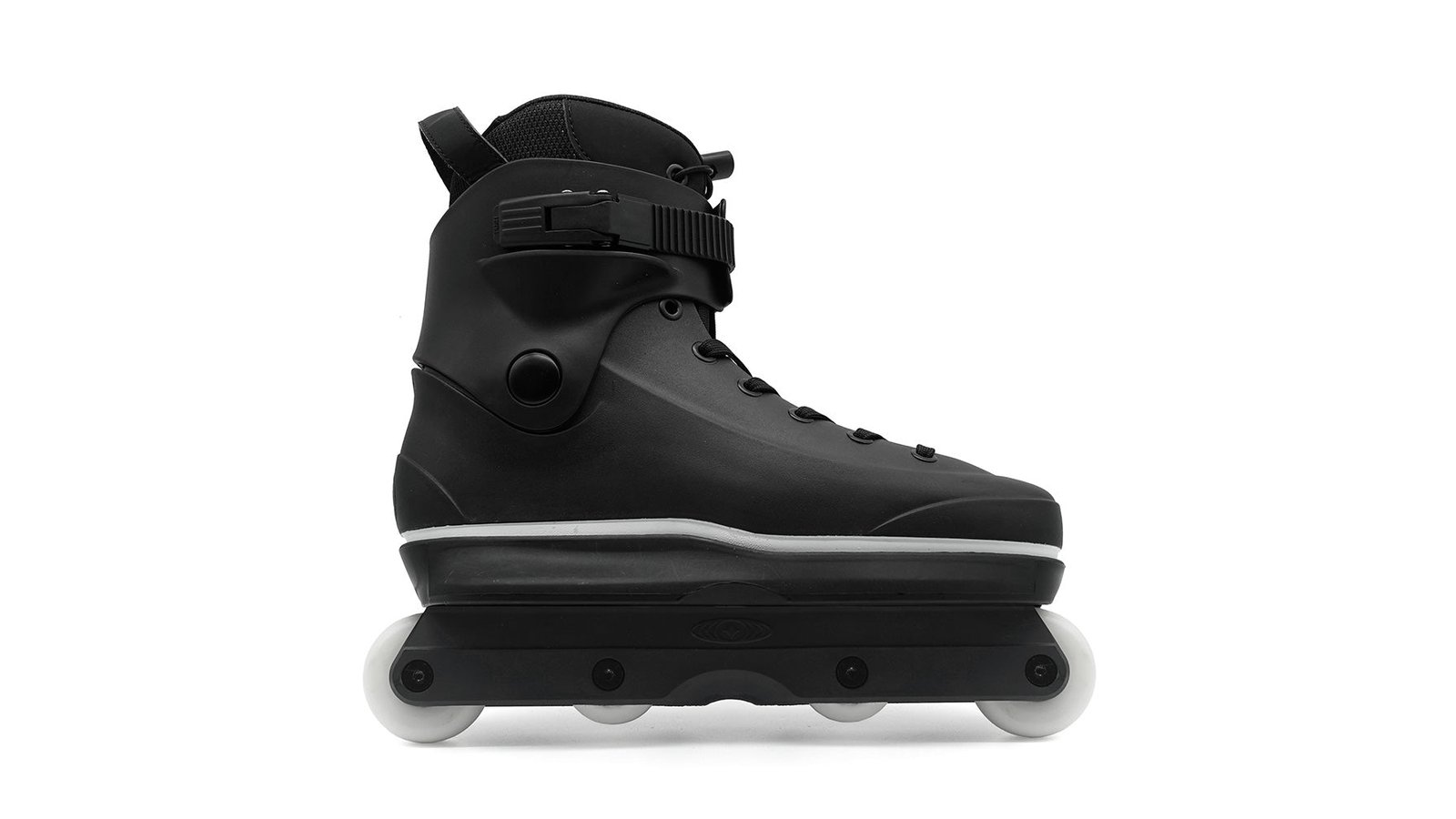
The V2 switched to a softer plastic, according to Be-Mag, then the V3 slimmed the shell around the ankle, according to Modern Skate.
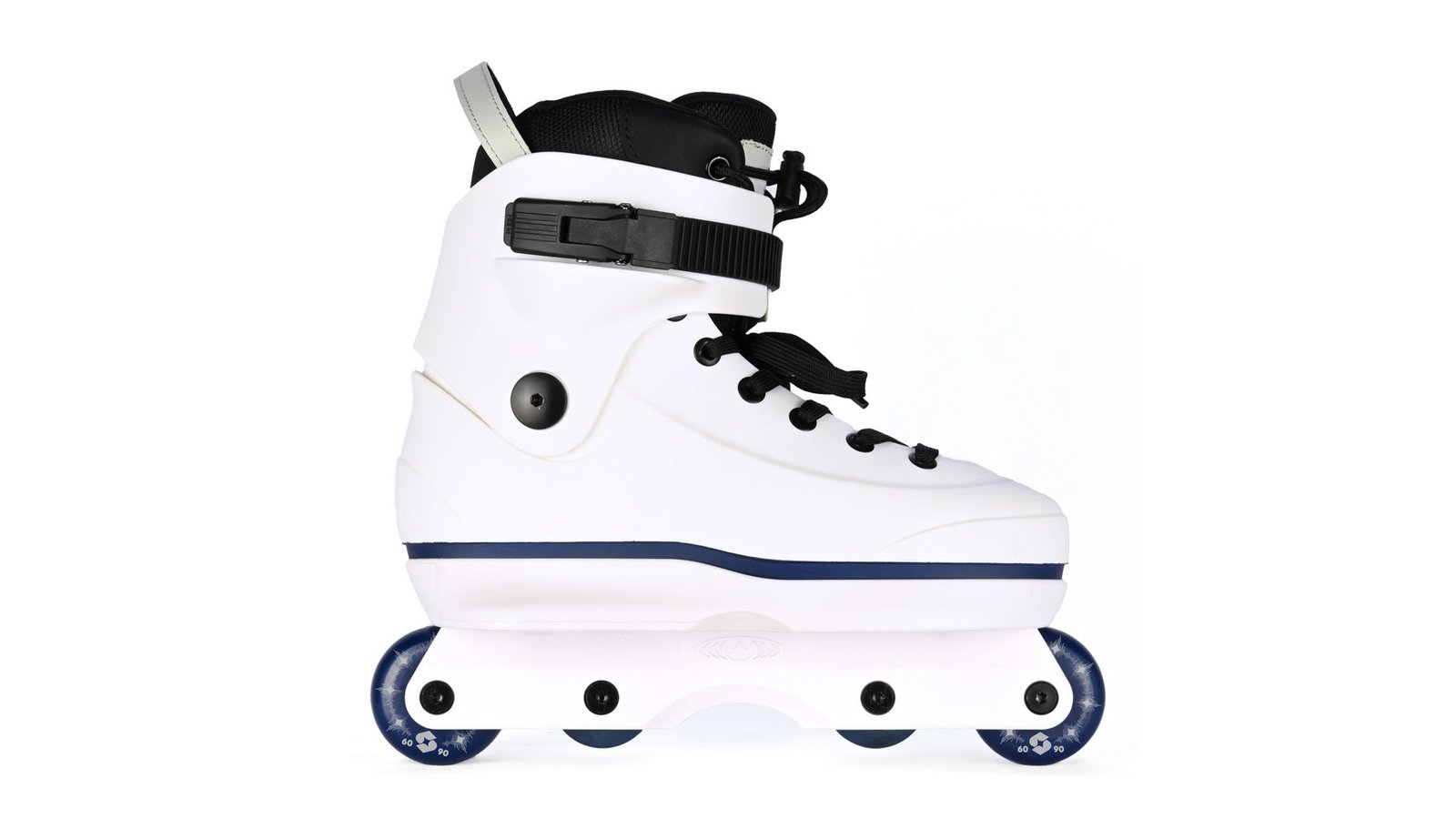
2024: TNEC 58
In April 2024, The New Everything Company introduced the TNEC 58: soul plate and frame in one piece, riveted parts, 58 mm wheels and no UFS mounting. The brand aims for the best price on the market, according to Rollernews.
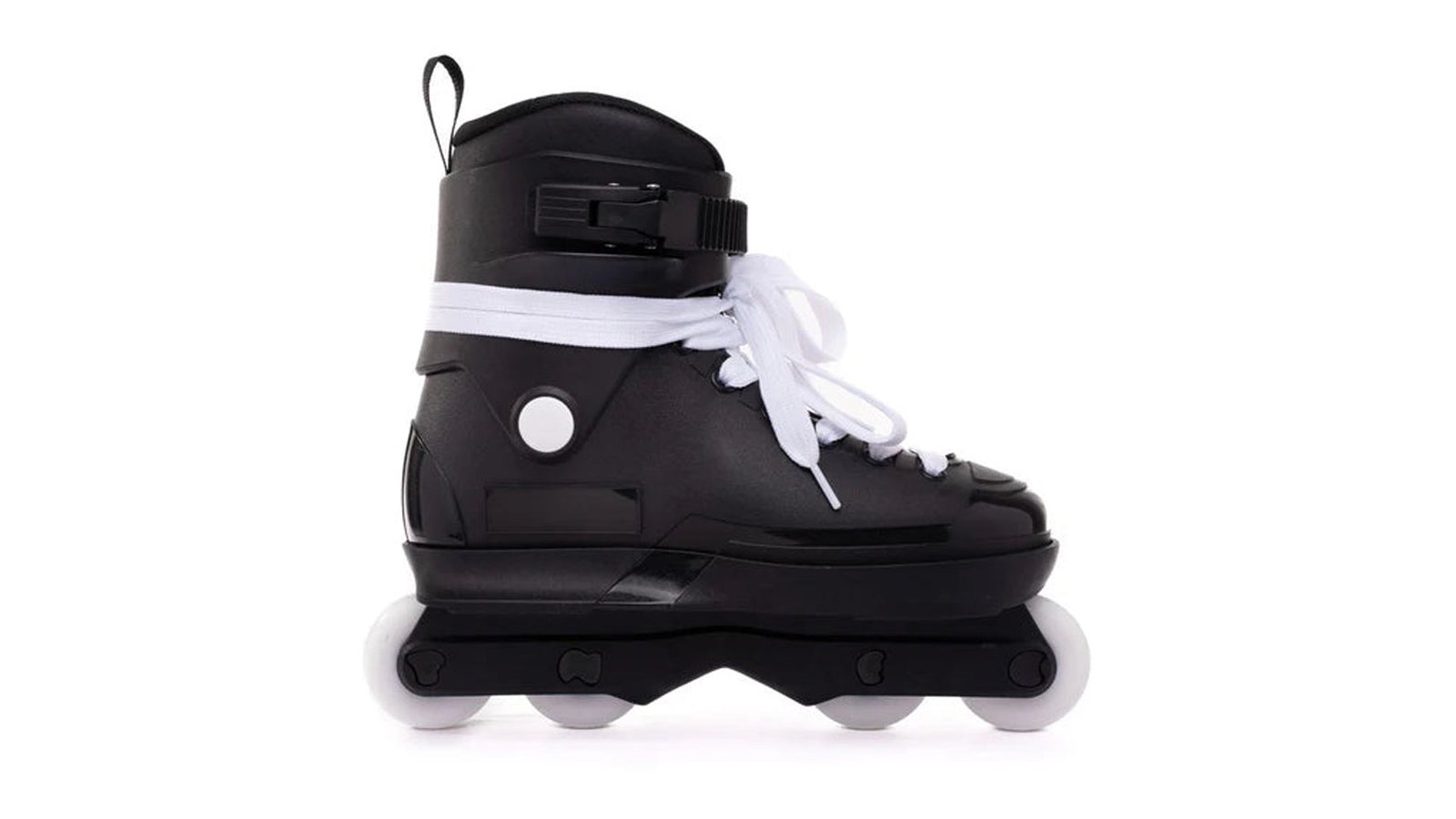
Also in 2024, the British brand Echo launched its first aggressive skate, the Verve. The shell and cuff use a TPU composite made from at least 30% recycled material, according to Echo.
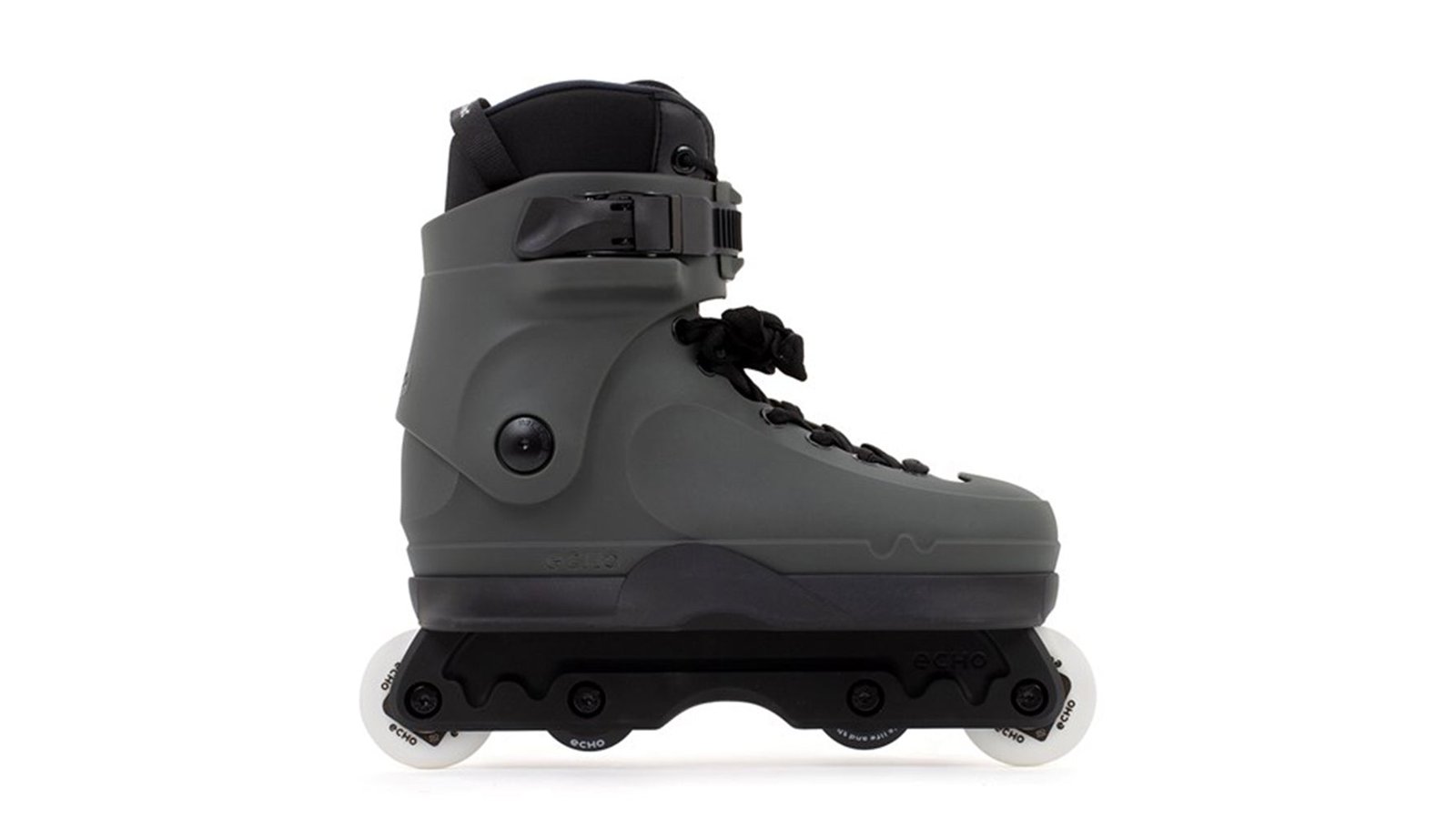
Around 2025: Them 901 and Cougar 7003
Them released a new boot, the 901. In 2025, it was the base of a limited edition for the 25th anniversary of the video game Jet Set Radio, according to Be-Mag.
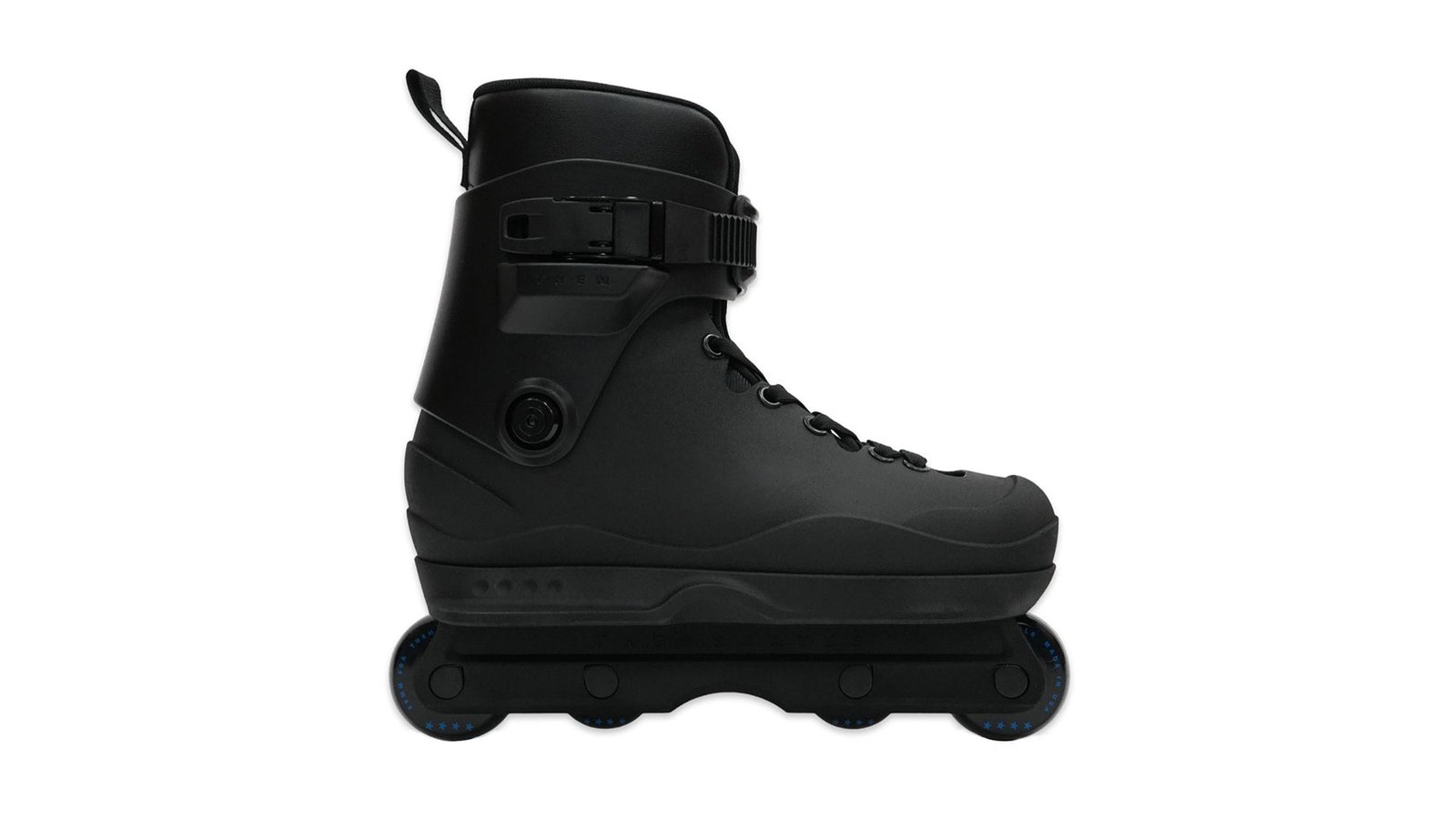
The same article presents the 7003 as Cougar's first model. With it, this Chinese manufacturer brought its first aggressive skates to Europe, according to Grindhouse. In 2026, Cougar released Julien Cudot's pro model, according to This Is Soul.
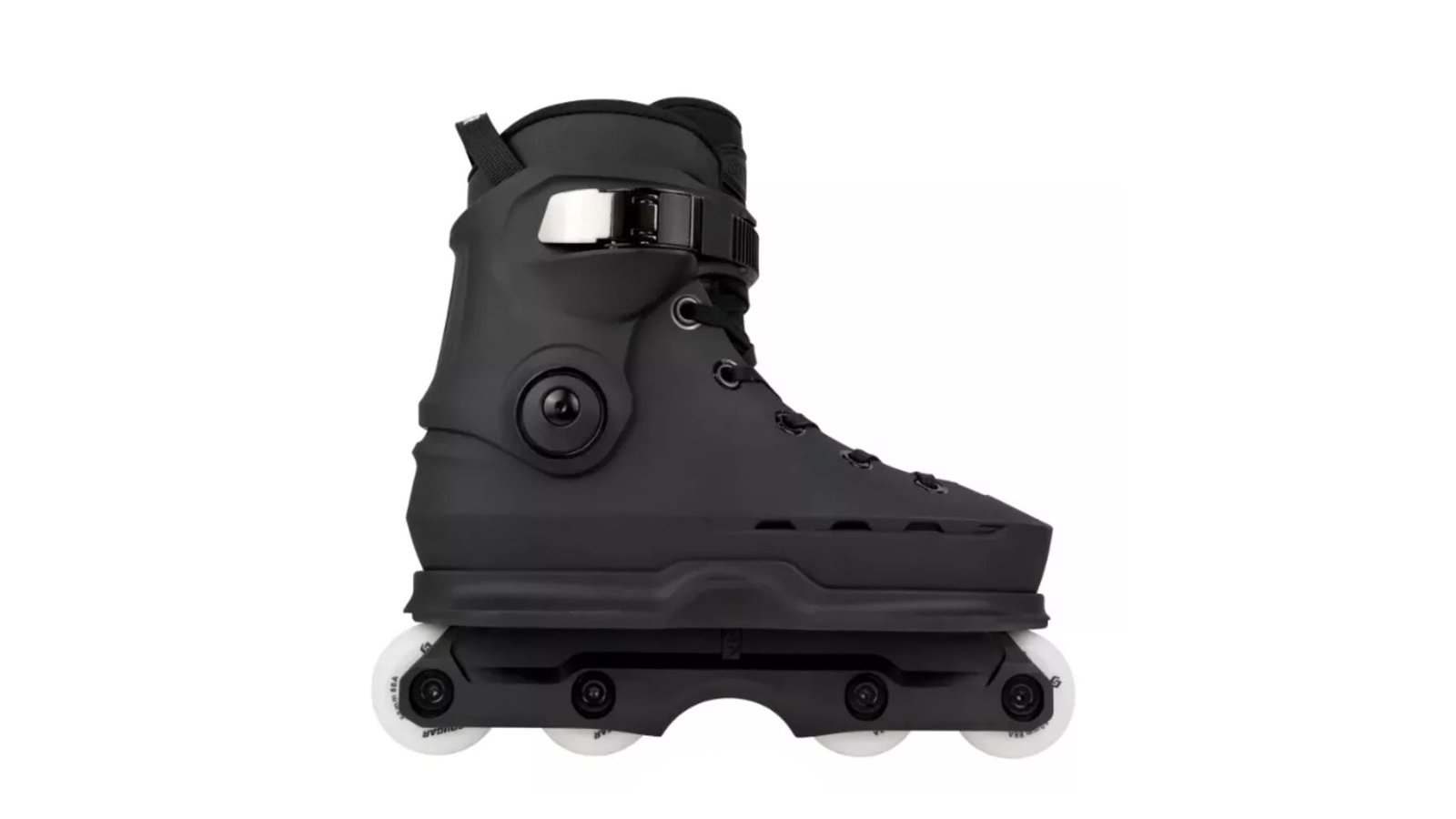
Playlife: Reactor and Rave Tomo Pro
Playlife, a former Benetton Group brand according to Wikipedia, now belongs to Powerslide. Its Reactor is an entry-level complete skate built on the first-edition Sway boot. The brand also has a pro model, the Rave Tomo Pro, with a look inspired by 90s skate shoes and a Kizer Fluid IV frame, according to Grindhouse.
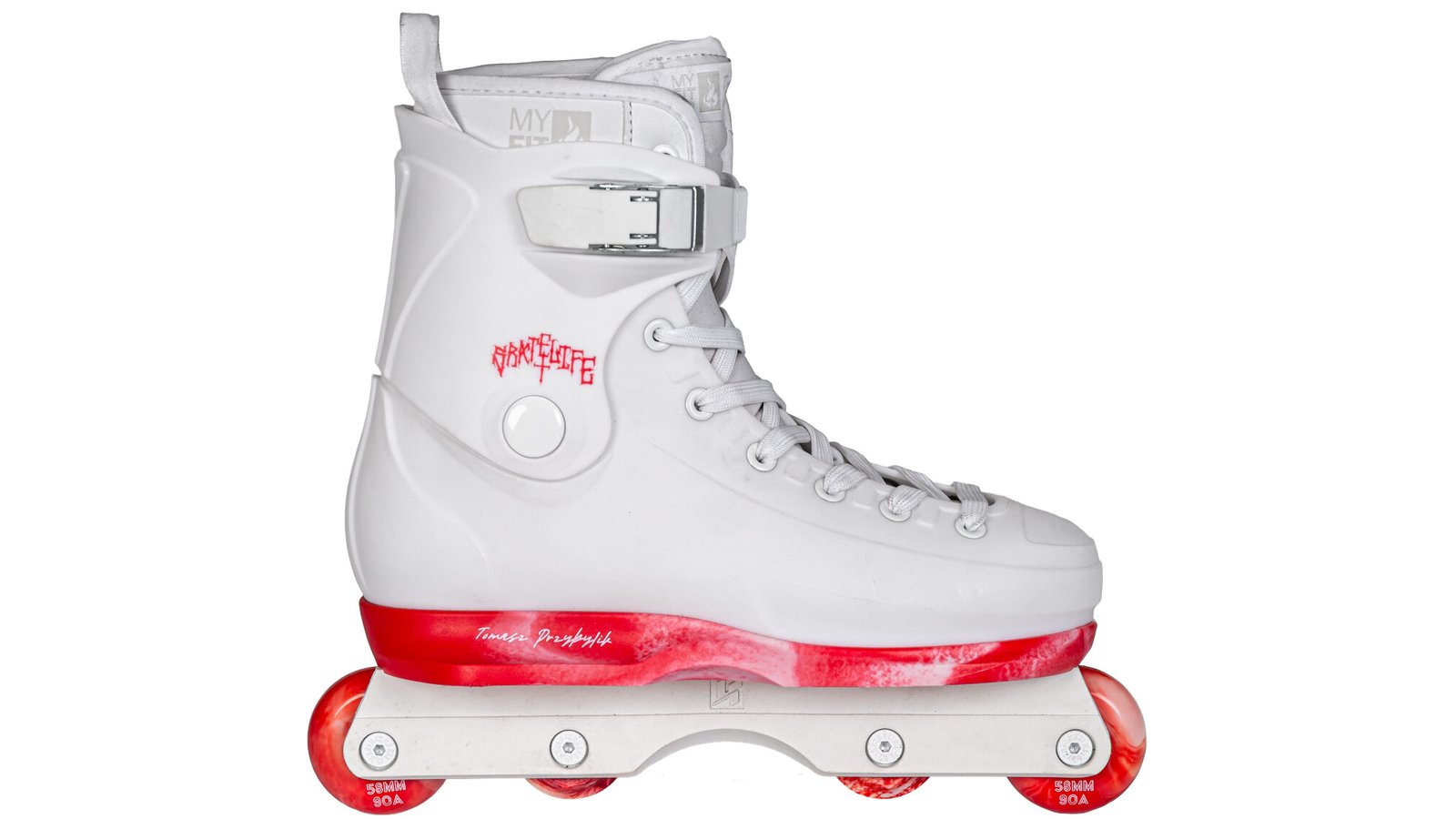
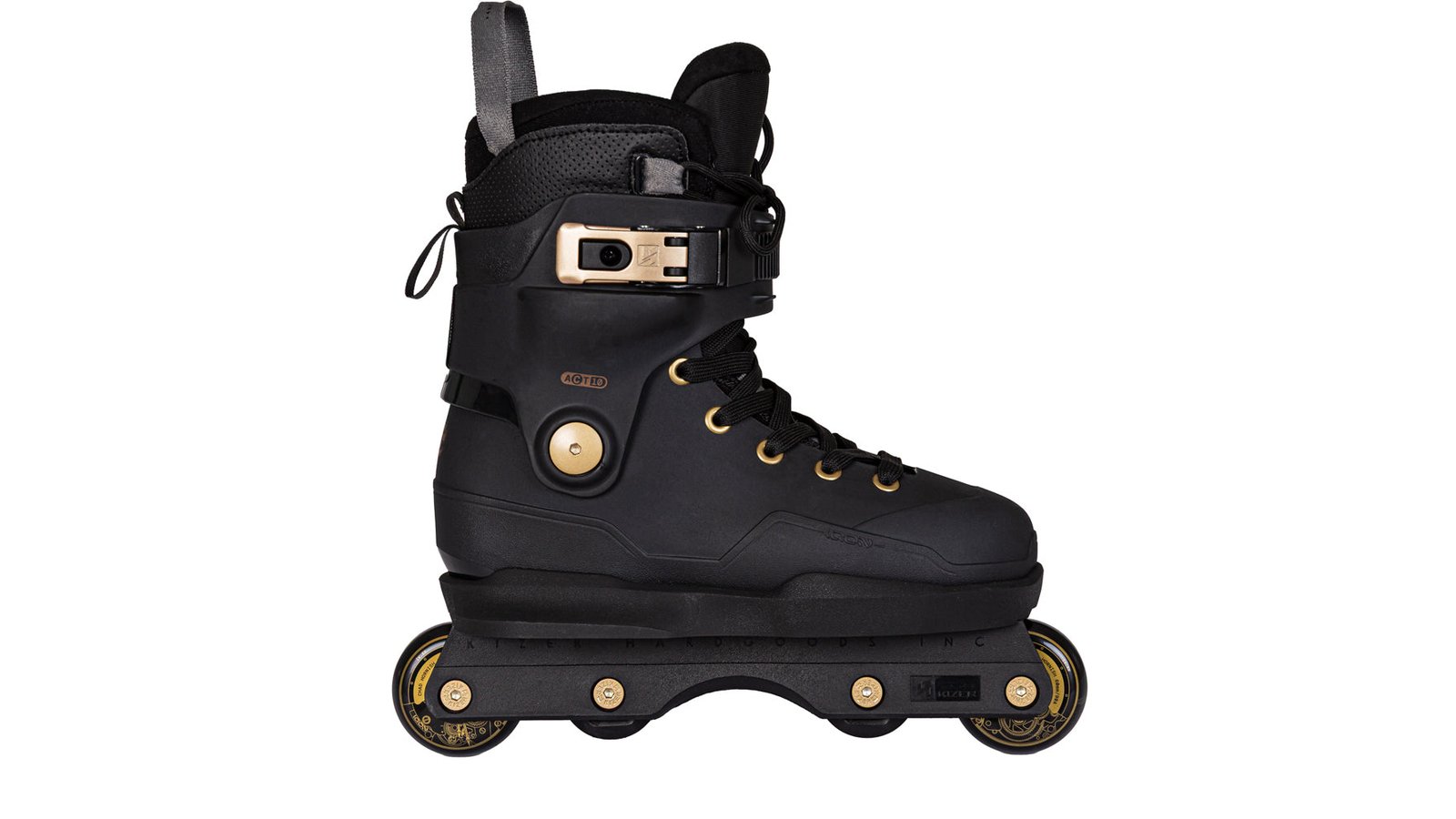
Iqon ACT AG and Mesmer Eclipse TS: one boot, several mountings
At Powerslide, the Iqon ACT AG takes several frame mountings on the same boot, including UFS, according to Powerslide.
The Mesmer Eclipse TS, inspired by the Throne, took three years to develop. It is mounted in UFS+ with a Kizer Lowrider frame, according to Powerslide.
The 6 big changes in aggressive skates
| Change | When | What it changed |
|---|---|---|
| Dedicated aggressive skate | 1988 | A reinforced shell to take jumps and grinds |
| Base plate, then soul plate | Mid-1990s | Grinding under the sole, not just on the frame |
| UFS standard | 1999-2001 | Any UFS frame fits any UFS boot |
| Soft and lighter boots | 2000s | More mobility and feel |
| Unibody | 2015 | Boot, soul plate and frame in one piece: lighter and more precise |
| Big wheels and UFS+ | Since 2015 | More speed in the street, longer frames |
Gear, then and now
| Part | Then | Now |
|---|---|---|
| Shell | Derived from hockey, heavy and stiff | Lighter (Razors SL, 2008), carbon (Deshi then USD, 2008-2009) or unibody (USD Aeon, 2015) |
| Mounting | One system per brand | UFS standard since 1999-2001, plus unibody and UFS+ |
| Soul plate | No grind surface, then a base plate (K2 Fatty, 1996) | Soul plate and backslide as standard, often replaceable |
| Wheels | Small wheels, the lowest possible frame | Your choice: flat, anti-rocker or big wheels up to 72 mm and beyond |
| Liner | Basic | More comfortable, better cushioning |
Aggressive skate vocabulary
- Soul plate: the hard plastic plate under the sole that you slide on.
- H-block: the part of the frame between the two middle wheels that locks onto the obstacle during a grind.
- Backslide: the grind surface at the back, flush with the soul plate.
- Anti-rocker wheels: the two middle wheels, smaller and made of plastic or hard urethane, so the H-block can touch the obstacle.
- Overboot: an extra shell fitted over the boot, as on the Valo TV2.
- V-cut: a liner cut in a V shape under the calf, according to Roller en ligne.
- Frame: the hard plastic chassis that holds the wheels.
Definitions come from Wikipedia and Roller en ligne.
How we built this timeline
Every date and model cites its source: Wikipedia, the brands (Powerslide) and the sport's media (Be-Mag, Rollernews, Roller en ligne, This Is Soul, Bladeville, Slide Inline). When sources only give an approximate date, we write "around". Models marked "around" come from Wikipedia's model table, which itself notes that its dates still need verification. The same model can be dated differently by different sources. Photos come from Wikimedia Commons under free licences and from online shops: the source is given under each image. The cover image is a RideMyPark collage made with This Is Soul photos: Roces 5th Element, USD Aeon, Them 909, Mesmer Eclipse TS. Missing a model that shaped your skating? Let us know.
Still got your old M12s or Fatties at the back of a cupboard? Dig them out and find a skatepark near you on the RideMyPark map.
Keep exploring
- Skatepark elements: 41 obstacles explained
- Rolling Along: An Inline Movement: trailer of the 2017 inline skating documentary
- The RideMyPark map: find a skatepark near you
- Get the RideMyPark app on iOS and Android